-Your complete guide from fitness garage to reading body content analysis of fat, muscles, and water percentage:

- What is the inbody: It is a device that works with electrical impulses through connected electrodes. It measures detailed percentages of fat, water, and muscles in the body and calculates ideal ratios based on your weight, height, and age.
-
Before doing the inbody measurement, follow these instructions:
- Do the tests on an empty stomach
- Do the test after you leave the bathroom
- Don't do exercises before the test
- Make sure you stand on your feet for 5 minutes before measuring, because sitting or lying down changes how water is distributed in the body.
- Don't do the test after sauna or shower.
- Don't do the test during your period because water retention increases.
- Do the measurement at a temperature between 20 and 25 degrees Celsius
- Every time you measure, do it under the same conditions, same time, and wearing the same clothes.
Now we will explain the test abbreviations and divide each part:
-
First: measuring muscle mass and body fat
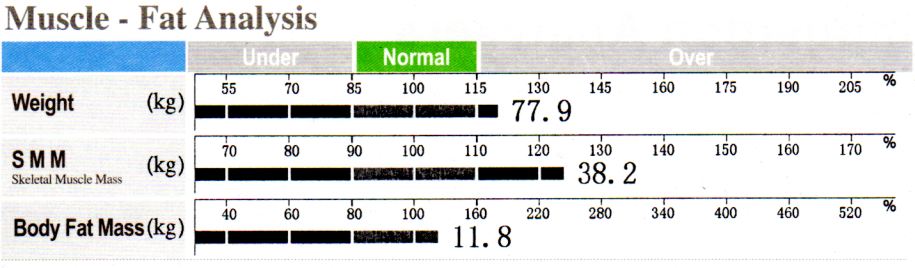
Weight: This means weight in kilograms
SMM:This means the weight of muscle mass in the body
Body fat mass: This means the weight of fat mass in the body
In the previous example, the person’s weight is 77.9 kg, muscle mass weight is 38.2 kg, and body fat weight is 11.8 kg.
In the next example, we’ll show a picture of three different measurements for fat and muscle weight:
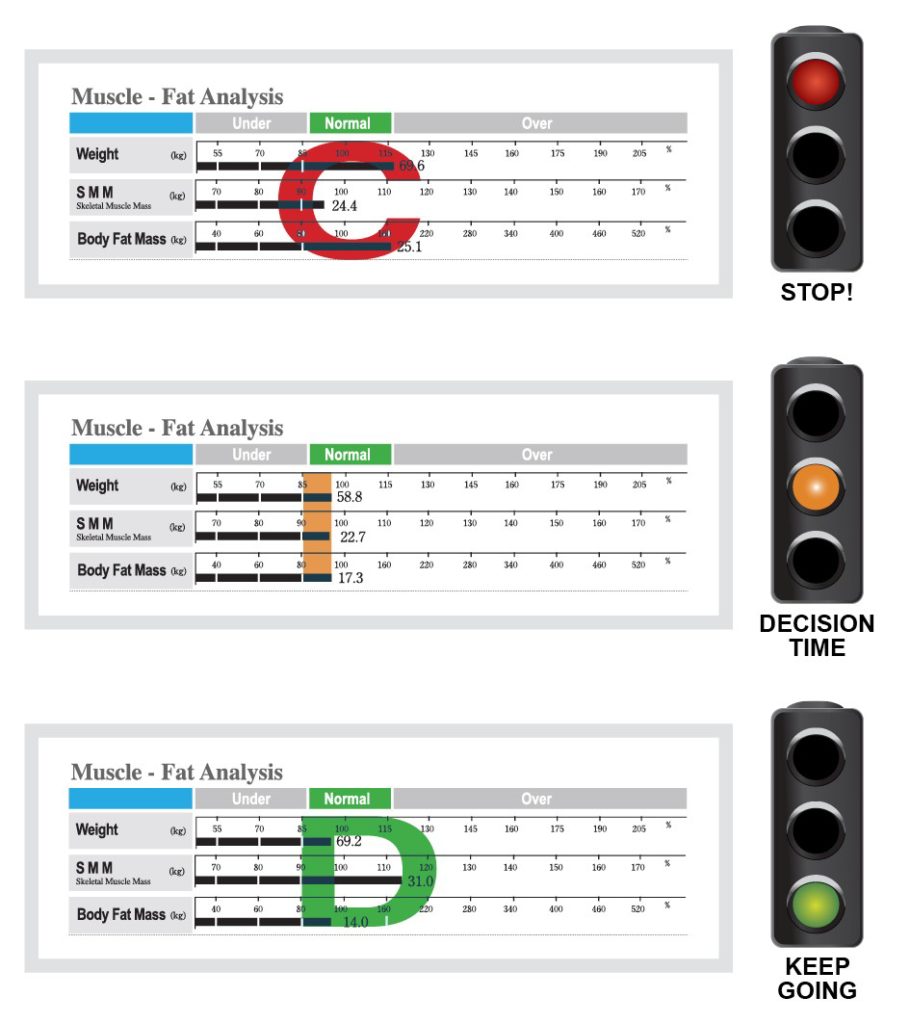
In the previous three examples, the worst measurement is example C as it has a high body fat percentage compared to muscles which is a warning sign to change the diet and start focusing on losing excess fat and increasing muscle mass.
Secondly:
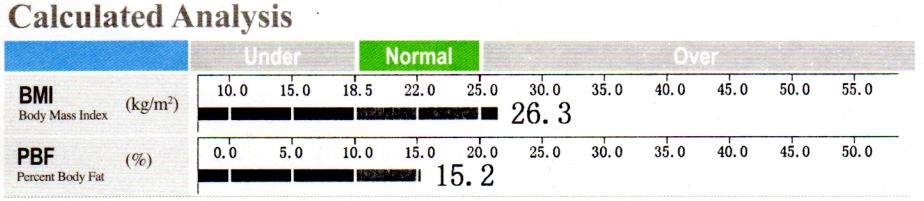
BMI:
It is the famous measurement Body Mass Index or BMI, it is the body weight divided by the square of the height in meters.
PBF:
And it is Percent Body Fat, which is the percentage of fat in the body. It can be calculated by dividing the weight of fat by the total body weight.
Table AThe following shows average fat percentages for women and men and when it increases to obesity levels:
|
Description |
Women |
Men |
|
Athletic person |
14, 20% |
6, 13% |
|
Physically fit |
21, 24% |
14-17% |
|
Moderate activity |
25, 31% |
18-24% |
|
Severe obesity |
higher than 32% |
higher than 25% |
Third: WHR

It's the ratio between waist and hip circumference (waist hip ratio). The inbody device doesn't use a measuring tape but relies on fat distribution in the belly and hips.
It's an important measure, where a number over 0.85 for men or over 0.9 for women means the body shape is apple-shaped, which is linked to serious diseases like diabetes, heart disease, and cancer.
Fourth: BMR

It's the basal metabolic rate that shows how active the body's burning is overall. If it's normal, high, or low, a nutritionist or consultant usually asks for medical tests to check thyroid gland activity or if you have any issues affecting weight loss or gain.
Fifth: lean body mass

Muscle mass weight in arms, legs, and trunk, whether the muscle amount is normal, low, or high.
Sixth:
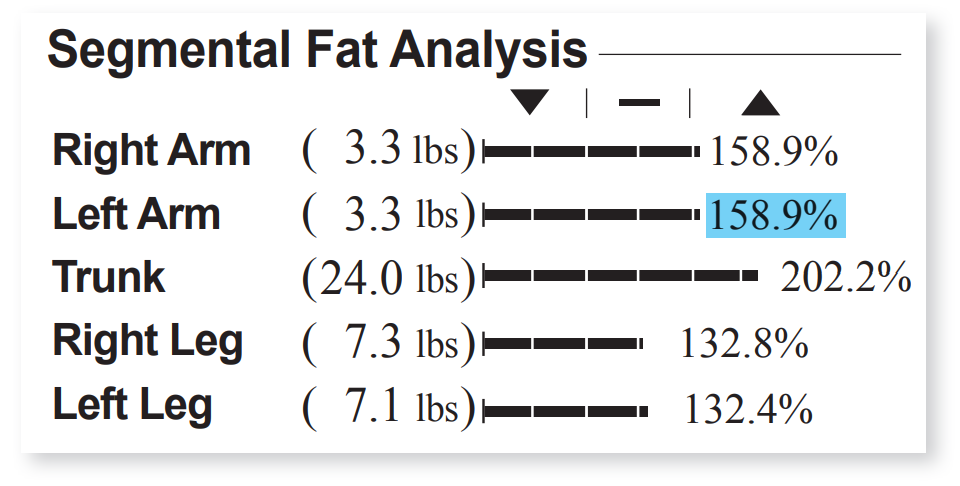
Segmental fat analysis: weight and fat percentage in arms, legs, and trunk.
Seventh:TBW

This is the total body water weight.
Eighth: Protein

Protein amount inside body cells is a key health indicator because 15% of body weight is protein. For example, AIDS patients and malnutrition patients have less protein than normal.
Ninth: FFM or Fat Free Mass

which is the weight of the lean mass or what is called LBM. It equals “body weight - fat weight.
Tenth:Minerals

and sometimes called TBM Or Total Body Mineral, which is an indicator of human body health and bone safety.
Eleventh: Muscle Control

This is the amount of muscle the patient is advised to increase. Here it is zero, meaning the trainee's muscle weight is normal.
Twelfth: Fat Control

The amount of fat the trainee needs to lose.
Thirteenth: Fitness score

It's the final result or summary of the report that gives the person an assessment of their physical condition.
70 or less: A weak or obese person who needs diet and exercise.
70 to 90: A person in normal physical and health condition
AOver 90: A person in excellent health with high muscle mass