Watermelon is considered one of the fruits known for being low in calories. It also provides many important nutrients to the body. Plus, watermelon is full of water, so it's extremely refreshing.
You can eat watermelon fresh or frozen, as is or as juice. In all forms, it offers many vitamins and minerals good for the body. So in this article we'll look at the nutritional value of watermelon and its important health benefits for the body.
-
Nutritional value of watermelon :-

Here’s the nutritional value in 100 grams of watermelon :-
| Calories | 30 calories |
| Sodium | 1 milligram |
| Fat | 0.2 grams |
| Carbohydrates | 7.6 grams |
| Fiber | 0.4 grams |
| Sugar | 6.2 grams |
| Protein | 0.6 grams |
| Water | 91 % |
-
Carbohydrates :-
A 100 gram serving of watermelon provides about 7.6 grams of carbohydrates, most of these carbs are simple sugars like glucose and sucrose, and a small amount of carbs are fiber.
The glycemic index GI of watermelon is high, ranging between 72-80, however a serving has a relatively low amount of carbs, so eating watermelon won't have a big effect on blood sugar levels.
-
fiber :-
Watermelon is a poor source of fiber, a 100 gram serving provides only about 0.4 grams of fiber.
Still, because of the high fructose content in watermelon, it is rich in short-chain fermentable carbs, but eating a large amount of fructose may cause digestive issues, especially for people who have trouble absorbing fructose.
-
Fat :
Watermelon doesn't have much fat, a 100g serving gives about 0.2 grams of fat.
-
Protein :
Watermelon isn't a good source of protein, a 100g serving gives about 0.6 grams of protein.
-
Vitamins and minerals :
Watermelon is a good source of many Vitamins Like vitamin C, and many Vitamins and minerals Others, which include :-
-
Vitamin C :- Vitamin CA strong antioxidant, essential for skin health and immune functions.
-
Potassium :- Potassium An essential mineral for controlling blood pressure and heart health.
-
Copper Copper is a mineral found in many plant-based foods in high amounts.
-
Vitamin B5 Vitamin B5, known as pantothenic acid, is found in almost all foods.
-
Vitamin AWatermelon contains beta-carotene, which the body can convert into Vitamin A.
-
Health benefits of watermelon :-

Whole watermelon and watermelon juice have many health benefits, which include :-
-
Reducing blood pressure :-
High blood pressure is one of the main risk factors for chronic diseases and early death.
Watermelon is a good source of citrulline that turns into arginine in the body. Both of these amino acids help produce nitric oxide.
Nitric oxide is a gas that causes the tiny muscles around blood vessels to relax and stretch, which lowers blood pressure.
-
Reduces insulin resistance :-
Insulin is a vital hormone in the body. It helps control blood sugar levels, andInsulin resistance is when cells become resistant to insulin's effects.
Because of this, insulin resistance can cause high blood sugar and is linked to metabolic syndrome, or Diabetes type 2.
Drinking watermelon juice and its arginine is linked to lower insulin resistance.
-
Reduces muscle soreness after workout :-
Muscle soreness is a common side effect of exercise, especially tough workouts.
Many studies showed watermelon helps reduce muscle soreness after exercise.
-
Fighting dehydration :-
Watermelon is about 92% water, making it a very hydrating food choice. So if you're not drinking enough water, especially on hot summer days, try eating some watermelon.
As a result, you'll get more micronutrients along with added hydration to the body.
-
It reduces cancer risk factors:
Antioxidants in watermelon include various flavonoids and carotenoids. These antioxidants help repair cells and might also lower the risk of infections and some types of cancer.
-
It helps with weight loss:
A study on overweight adults showed they felt fuller eating watermelon instead of low-fat cookies. They also lost body weight, lowered BMI, and reduced blood pressure.
-
Allergy :-

Allergy to watermelon is rare but possible. Some people may feel an allergic reaction like itching in the mouth after eating watermelon.
In rare cases, it can be more serious and cause throat swelling or severe allergy.
-
Storage and food safety :-

You can store fresh whole watermelon at room temperature. Heat dries out the watermelon flesh, so if it’s hot, keep the watermelon in a cool place like the fridge.
You can keep whole watermelon in the fridge for two to three weeks. But once cut, it lasts up to five days in the fridge. You can also freeze cut watermelon pieces.
-
How to prepare :-
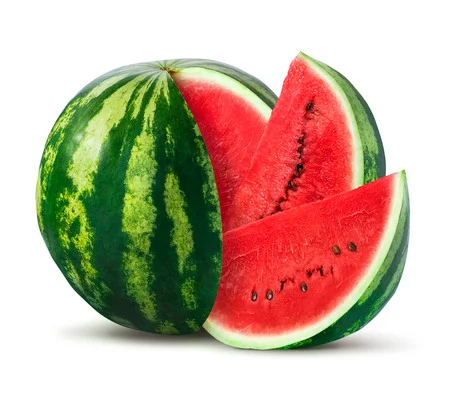
Besides eating it as fresh slices, you can add watermelon to juices and salads. Its sweet flavor also goes well with cheese, nuts, and other protein sources.
You can also grill watermelon or freeze it for a tasty treat. Put cold or frozen watermelon pieces in water or sparkling water for a delicious low-calorie drink.
The whole watermelon is edible, you can eat the seeds and the rind, which can be made into watermelon rind flour, or served after cooking, frying, or pickling.