


The postpartum period is a unique time. It brings all kinds of physical and emotional changes to a mother's daily life. Exercise can help speed up recovery, boost overall health, and improve mood no matter how long or often you do it.
It's key for every woman to remember that postpartum workouts aim to make you feel better, not add stress to your daily life. So take it slow and try to avoid any pressure linked to exercise.
In this article, we’ll cover top tips and guidance for working out after birth. Plus, a full exercise plan to help moms make the best choices for themselves.
Tips to help you succeed during postpartum recovery

Before starting any routine, the mom should get approval from her healthcare provider. They can give the best advice on safe and effective workouts for her situation.
Experts usually suggest low-impact exercises that are gentle on joints and gradually increase in intensity as the body heals. Keeping a diary to track progress is a good idea.
Extra tips include:-
-
Listen well to your body and get some rest.
-
Keep your body hydrated and feed it nutritious foods.
-
Pay attention to how your body feels instead of just focusing on physical results.
-
Focus on proper form and technique instead of pushing yourself to the limit.
-
Don't hesitate to reduce the number of reps or sets.
-
Notice any pain or discomfort after each workout session.
The importance of exercising after childbirth

Exercising after childbirth offers physical and mental benefits that can positively affect health and outlook. It can also boost confidence and improve quality of life.
Also, regular physical activity can improve mood, energy levels, sleep quality, and help with moderate weight control.
Besides that, rebuilding core and pelvic floor muscles in women is key for better movement and flexibility overall, which can also boost blood flow and reduce weakness and discomfort.
Exercise can also improve posture, which might help prevent or ease pain, tension, and risk of injury.
Examples of a complete postnatal exercise plan
The following routine can help get fitness back at a comfortable pace after birth. Start with one or two exercises, add more each week, and you can tweak the exercises to fit each case.
1. Child's pose exercise

Child's pose helps ease lower back tension and promotes relaxation. You can put a pillow or folded blanket under your chest or hips for support in this pose.
- How to do the exercise
-
Start in the cat position. Kneel on the floor with your legs and knees together, and big toes touching each other.
-
Place your hands under your shoulders and bend your knees at a 90-degree angle.
-
Pull your body back until your buttocks touch your heels, keeping your hands still.
-
Breathe deeply and let yourself fully relax.
-
Move your body forward to return to the starting position.
-
Repeat this position for 5 minutes.
2. Heel sides exercise

Heel sides exercise strengthens the transverse abdominal muscles and is especially helpful after a cesarean.
- How to do the exercise
-
Lie on your back with your knees bent and feet flat on the floor.
-
Clasp your hands together and hold them on your chest to give your body more stability and balance.
-
Exhale, gently engage your abs and press your lower back into the floor.
-
Slowly straighten your right leg along the floor.
-
Return the extended leg back to the starting position.
-
Repeat this exercise 8-12 times for each leg, in 1-3 sets.
3. Cat-cow pose exercise
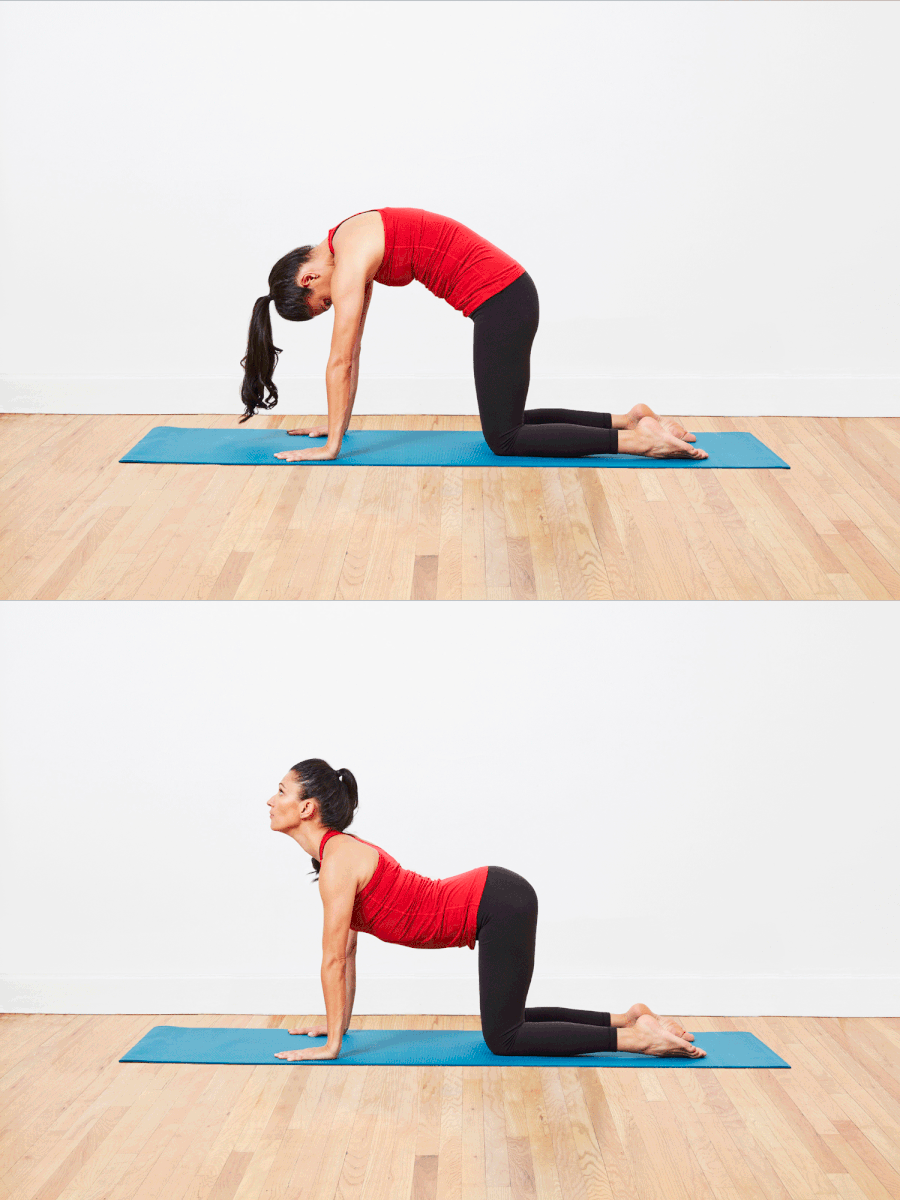
The cat-cow pose helps ease tension and stress.
- How to do the exercise
-
Start in the cat pose, with wrists under shoulders and knees under hips.
-
Inhale and look up, letting your belly drop toward the floor.
-
Exhale, tuck your chin, and pull your belly up toward your spine.
-
Repeat this move for about 1.5 minutes.
4. Glute bridges exercise
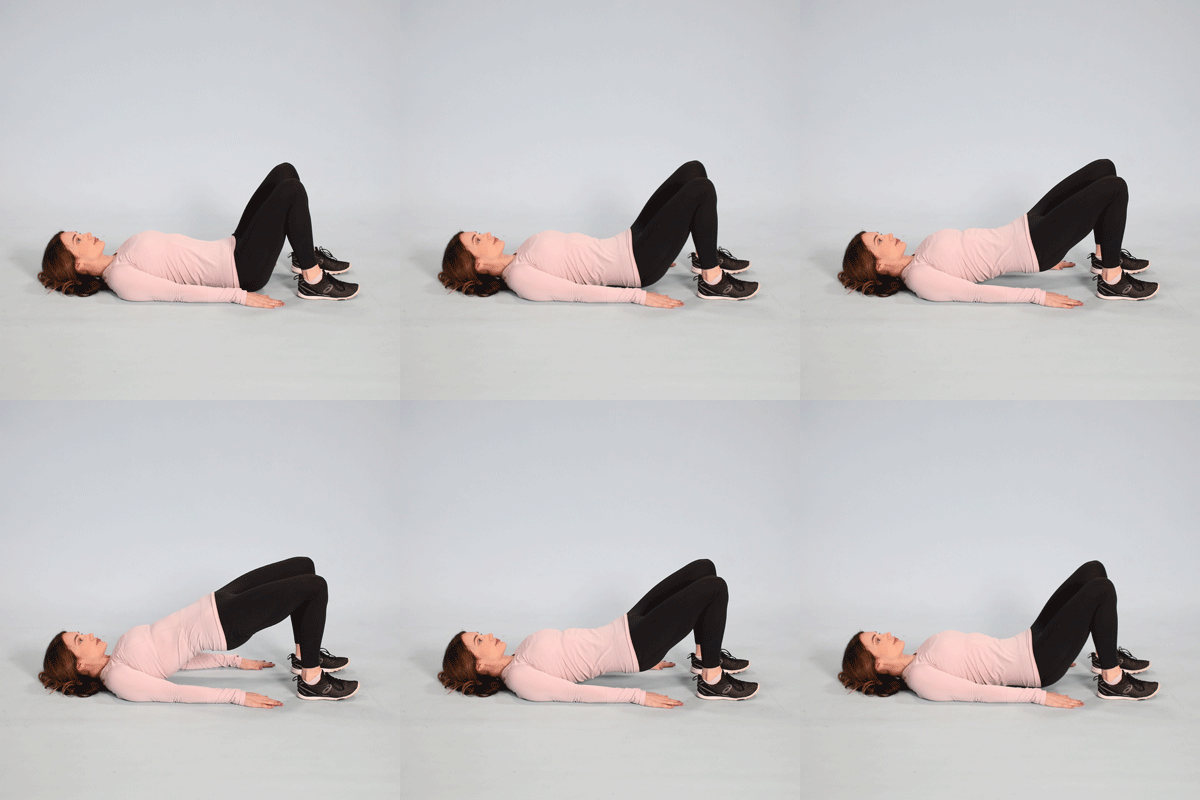
Glute bridges target your butt and hip muscles.
- How to do the exercise
-
Lie on your back, bend your knees, and press your feet against the floor.
-
Slowly lift your butt and hips up.
-
Hold the position for two seconds.
-
Slowly lower back to the start.
-
Repeat this exercise 10-15 times for 1-3 sets.
5. Reverse lunges

Reverse lunges strengthen your glutes, hamstrings, and quads, helping improve balance and stability.
To stay stable doing this exercise, you can put your hands on a wall or chair back. As you get stronger, use weights or dumbbells to make it harder.
- How to do the exercise
-
Stand up straight with your feet right under your hips.
-
Step your left foot back.
-
Lower your body until both knees are at a 90-degree angle.
-
Step your left foot forward to return to the start.
-
Repeat on the right foot, and keep going like that.
-
Do 8-12 reps for 1-3 sets of this exercise.
6. Bird dog exercise
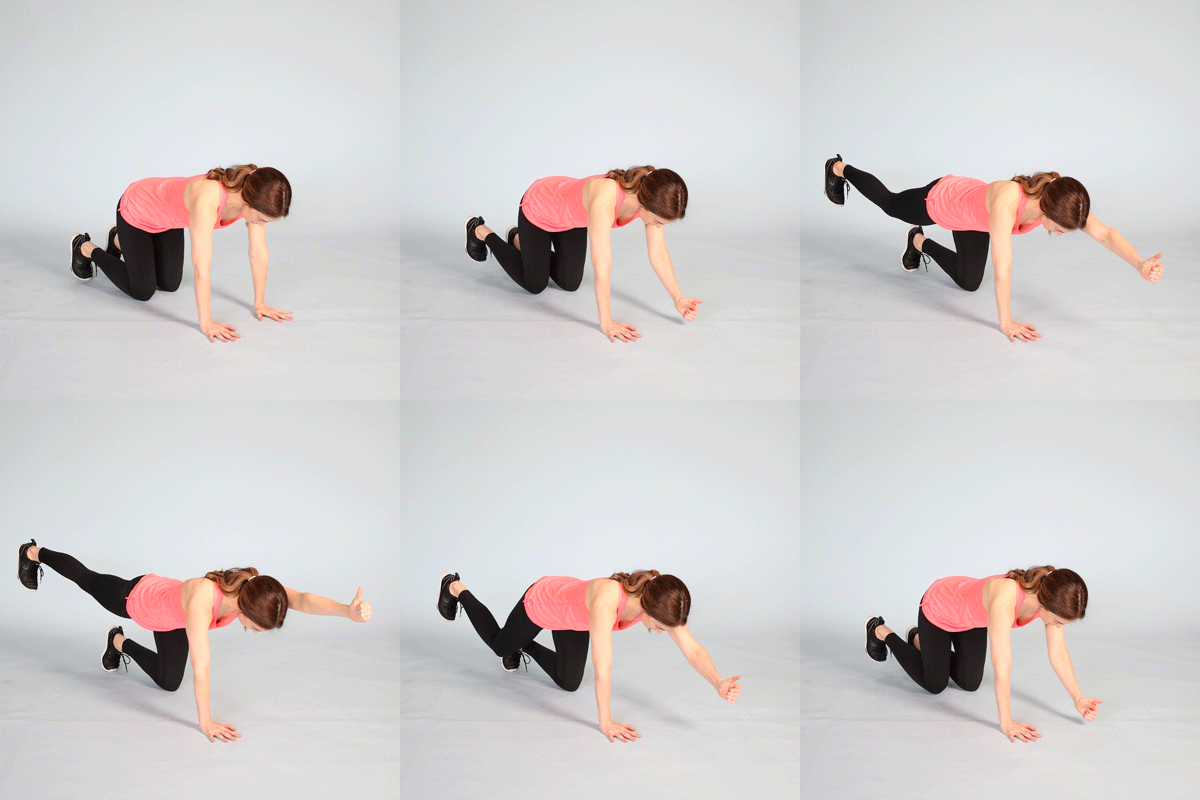
Bird dog helps improve stability and strengthen your core. To make it harder, you can add resistance bands.
- How to do the exercise
-
Start in the cat position, looking down or forward, with your body supported on your knees.
-
Engage your core muscles to keep your body stable.
-
Extend your left arm forward and your right leg back.
-
Hold this pose for two seconds before returning to the start position.
-
Repeat on the other side. That counts as one rep.
-
Do this exercise 8-12 reps for 1-3 sets.
7. Side plank exercise
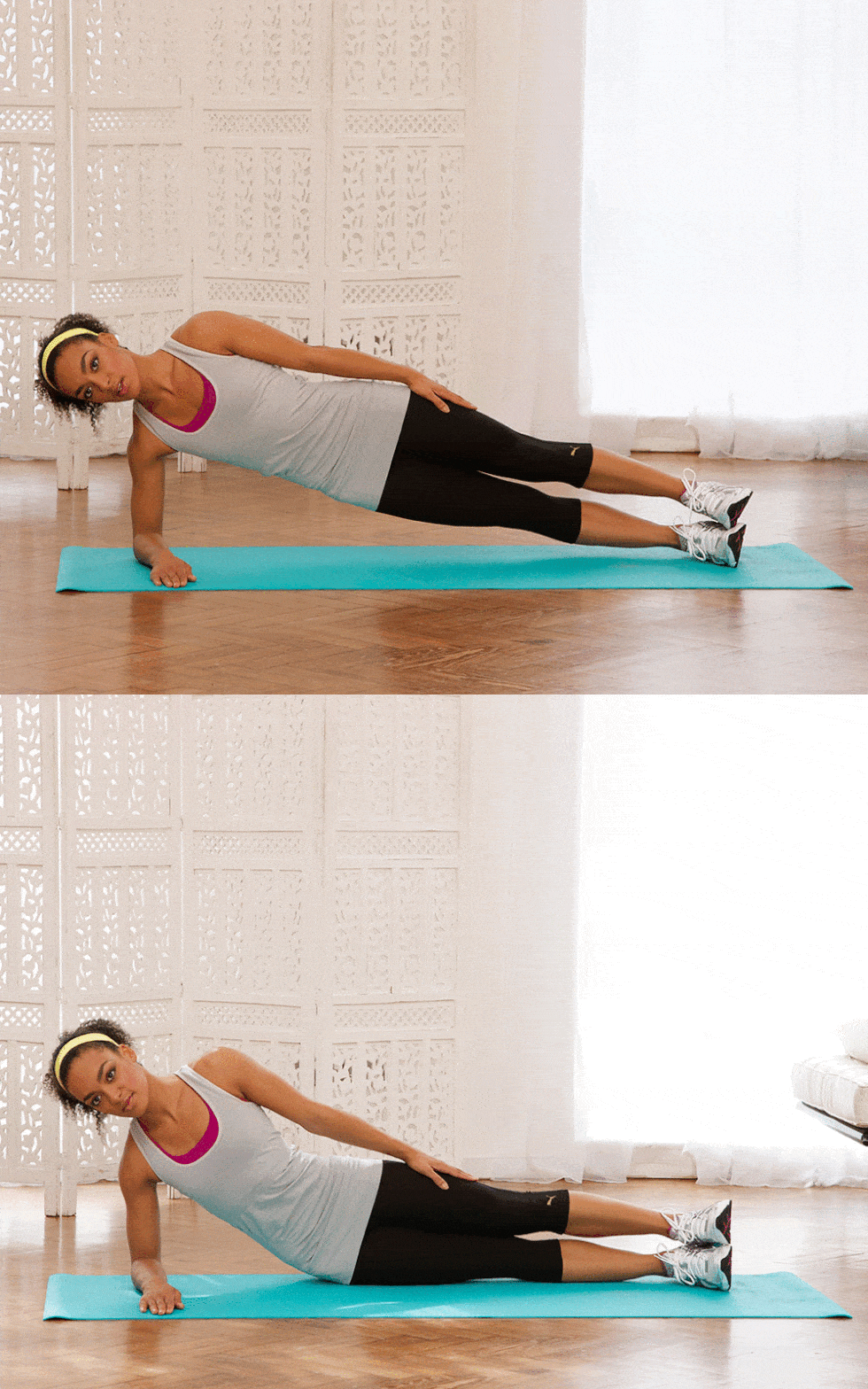
The side plank works your core and glute muscles which can help improve posture. To make it harder, you can add leg lifts.
- How to do the exercise
-
Start in a side plank position by bending your right arm under your shoulder to support your body.
-
Keep your legs stacked and straight out, aligned with the ground.
-
Rest your left leg on your hip or lift it up toward the ceiling.
-
Lower your hips down to the ground, then push them back up to the starting position.
-
Keep your body straight from head to heel.
-
Repeat on the other side.
-
Do this exercise for each side 8-12 reps in 1-3 sets.
8. Dead Bug Exercise
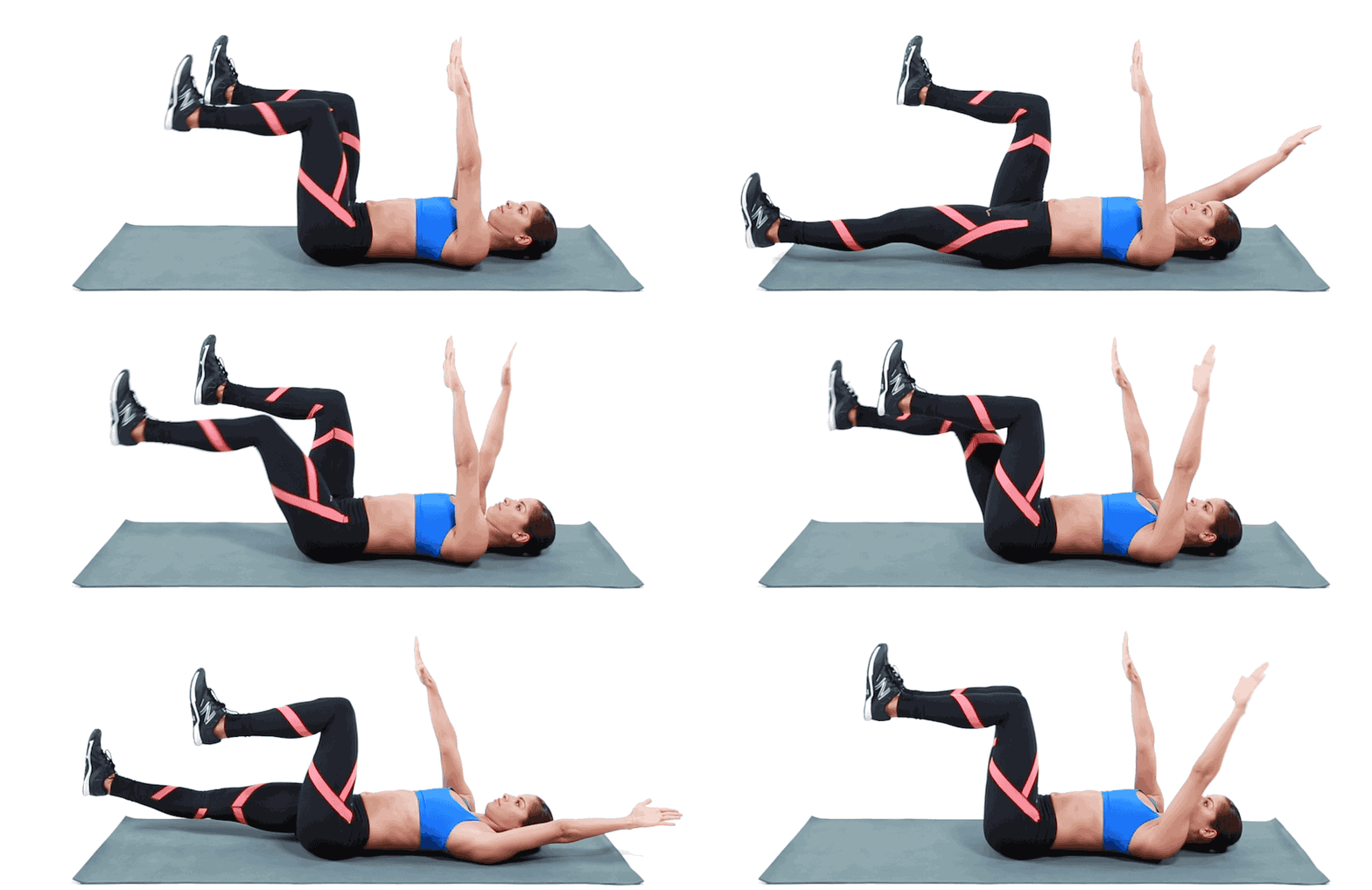
The Dead Bug exercise improves stability and balance while targeting core and hip muscles.
- How to do the exercise
-
Start by lying on your back, keeping your spine straight.
-
Extend your arms straight up.
-
Lift your legs, bend your knees at 90 degrees, and place them over your hips.
-
Lower your left arm and stretch your right leg straight on the ground.
-
Return to the starting position and repeat on the opposite side.
-
This counts as one repetition.
-
Repeat this exercise 5-12 times for 1-3 sets.
In the end, every woman should design postpartum exercises to fit her needs, fitness level, and recovery progress. Remember, fitness after birth is a journey, so be patient and move at your own pace.


