Surely many of us have heard of the glycemic index (GI), and that it relates directly to blood sugar rise, so it’s important to know it well especially for those who have diabetes. So in this article, we’ll cover everything about the glycemic index and its link to blood sugar spike.
-
What is the glycemic index (GI)?

The glycemic index or blood sugar index is a relative ranking of carbs in foods based on how they affect blood sugar levels. So when you are a type 2 diabetic, one of the best ways to control your glucose is to eat foods that don’t cause a big rise in blood sugar (glucose).
So knowing the glycemic index of the carbs you eat can help you set your meals to keep your blood sugar in the normal range.
-
What is the glycemic index average?

The glycemic index (GI), or blood sugar index, is a food classification on a scale from 1 to 100 based on how much it raises blood sugar.
Processed foods like sweets, bread, cakes, and biscuits have a high glycemic index, while whole foods like unrefined grains, non-starchy veggies, and fruits tend to have a low glycemic index. Carbs with a low GI are digested, absorbed, and metabolized slower than high GI ones, so they usually cause a smaller and slower glucose rise in the blood, affecting insulin levels less too.
-
Here is a list of some foods and their glycemic index:

|
Food |
Carbohydrate grams |
GI rate |
Average GI |
|
-White potatoes (medium) -Sweet potatoes (medium) -Carrots (½ cup) - Peas (green) - Chickpeas (1 cup) - Soybeans (½ cup) - Apple (medium) - Banana (medium) - White bread (1 slice) - Whole grain bread (1 slice) - Oats (½ cup) - Brown bread (1 slice) - Brown rice (1 cup) - White rice (1 cup) - Pasta (1 cup) |
34 24 6 11 54 13 15 27 14 12 27 12 45 45 43 |
56 : 111 44 : 78 16 : 92 39 : 54 31 : 36 15 : 20 28 : 44 46 : 70 64 : 83 52 : 87 42 : 75 48 : 58 39 : 87 43 : 94 40 : 60 |
Above 80 61 47 48 34 17 40 58 72 71 58 53 66 72 50 |
-
How the glycemic index (GI) is measured :-
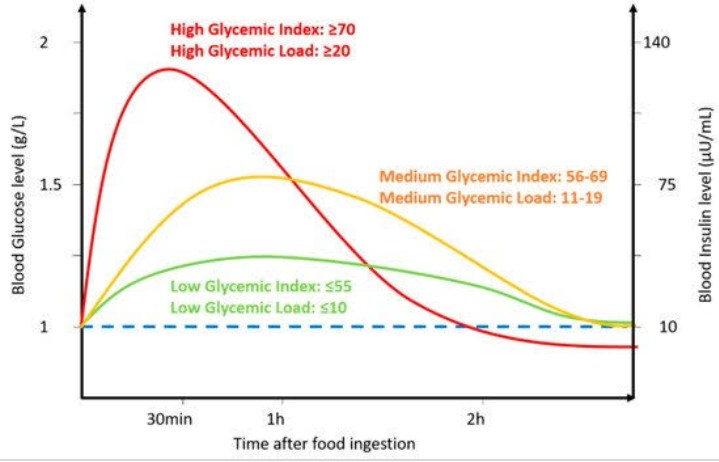
The index values are created through a very precise test where 10 people get 50 grams of the same digestible carbs called the test food. Researchers then measure each person's glucose response two hours after eating and plot the points on a chart, measuring the area under the curve (AUC) for glucose response.
On another day, the same 10 people consume 50 grams of pure glucose (reference food), and researchers again measure each person's glucose response (AUC) two hours after eating.
Then the glycemic index value for the tested foods is calculated by dividing the glucose level (AUC) of the test food by the glucose (AUC) of the reference food for each person.
The final GI value is the average of these ten numbers.
In the end, the glycemic index value is the person's blood sugar response to certain carbs. Note that individual responses may vary based on other factors depending on the person.
-
Glycemic index (GI) values :-

GI values can be divided into three ranges which are
-
Low glycemic index ← 55 or less.
-
Medium glycemic index ← 56 to 69.
-
High glycemic index ← 70 to 100.
Low glycemic index food is the kind that doesn't raise blood sugar much like food with medium or high glycemic index.
For example, rice milk (processed food without fiber) has a high glycemic index of 86, while brown rice (rich in fiber) has a medium glycemic index of 66.
-
Blood sugar index (glycemic index) versus blood sugar load :-
Some critics of the glycemic index say it doesn’t consider how much food you eat or its other nutrients like protein, fat, vitamins, minerals, antioxidants or their quality. Since the index just looks closely at carbs, following a diet based only on these numbers means you ignore a lot of other useful info to judge a food’s real health value.
To tackle the food amount issue, researchers made a scale called glycemic load (GL) that shows how much food is eaten. You calculate glycemic load by multiplying the glycemic index by the grams of carbs, then divide by 100. For example, an apple has a GI of 40 and 15 grams of carbs, so (40 × 15) / 100 = 6. So the blood sugar load of the apple = 6.
-
Glycemic load (GL) values :-
Like glycemic index (GI) values, glycemic load (GL) values are split into three ranges which are :-
-
Low glycemic load ← 10 or less.
-
Medium glycemic load ← 11 to 19.
-
High glycemic load ← 20 or more.
-
What are the benefits of referring to the glycemic index:

Since the carbs in food raise blood sugar, understanding the glycemic index can help you choose better foods to manage glucose.
Benefits of following a glycemic index meal plan include:
-
It helps you be more aware of your carb choices without full restriction.
-
If you aim for a low glycemic index diet, it's natural to focus on low GI foods like whole grains, fruits, and legumes, unlike high GI foods like processed stuff.
-
Depending on your health goals, following a diet based on the glycemic index (GI) means you can rely less on standard diet measures like calorie counting.
-
Just paying attention to your carb choices rather than cutting them hard can be more sustainable long term compared to tighter diets.
-
Where does the glycemic index (blood sugar index) drop:-
The glycemic index of foods can actually change based on several factors, which can make the measure unreliable sometimes.
What you eat with your meal can change blood sugar spikes, for example, eating an apple alone might cause a different blood sugar response than eating it with some peanut butter. Protein and fat can slow down carb metabolism, which leads to slower blood sugar rises.
-
Best way to test food impact:-
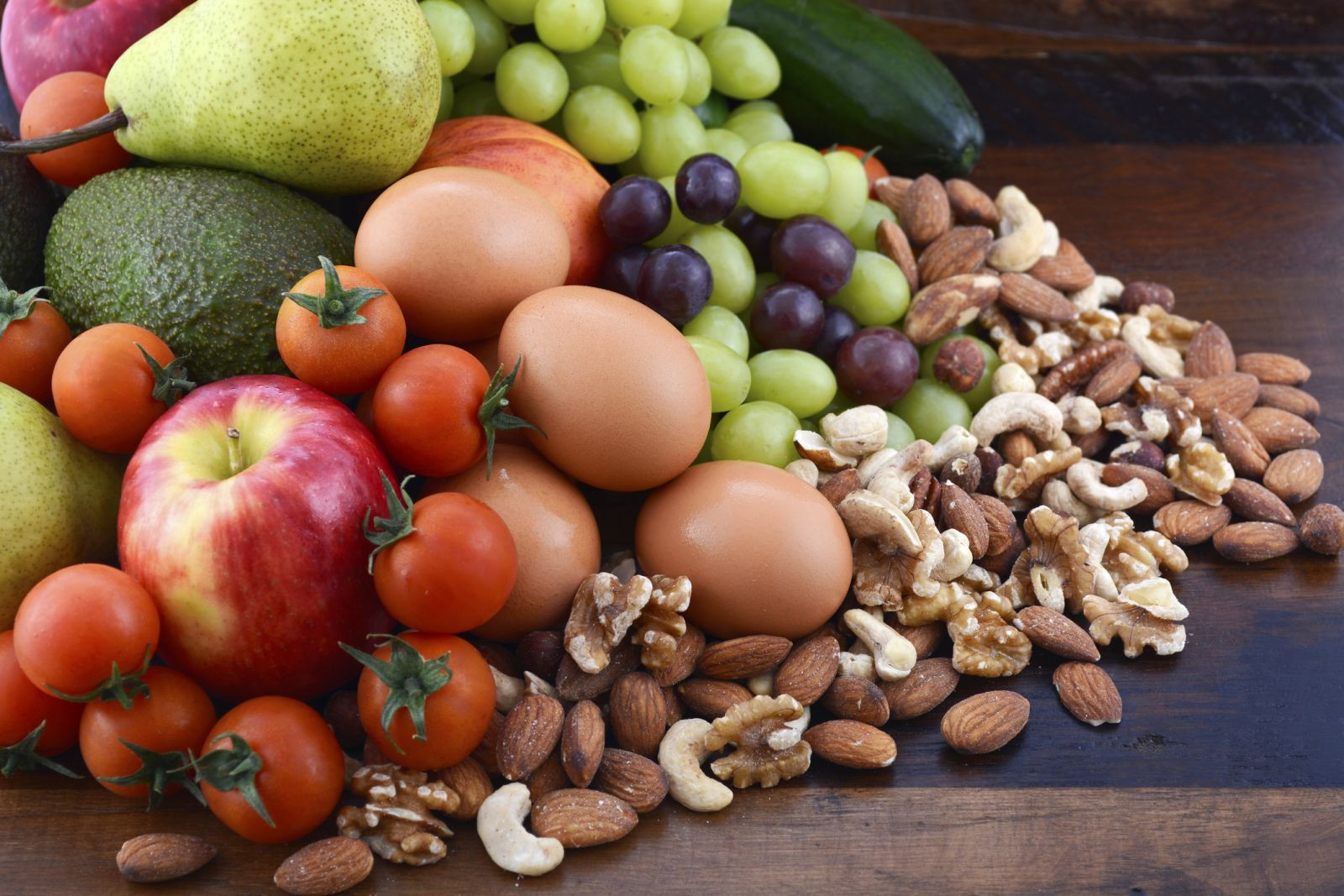
The American Diabetes Association says carb amount (grams of carbs) and available insulin are among the most important factors that affect blood sugar response after eating, and should be considered when planning meals.
The ideal way to see how your body reacts to certain foods is to test blood sugar two hours after eating the meal.
For most people, an ideal blood sugar result is under 180 mg/dL two hours after starting a meal. If you’re unsure about your blood sugar level you should talk to your doctor.
-
Some common questions about the glycemic index :-
-
Why aren’t foods like meat and butter on the blood sugar index (glycemic index)?

Foods without carbs are not listed on the blood sugar index. This includes beef, chicken, butter, and oils.
-
What are some good foods with a low glycemic index?
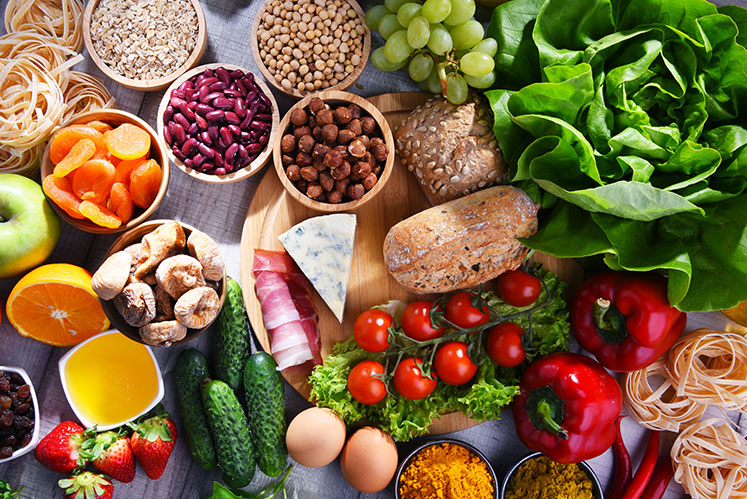
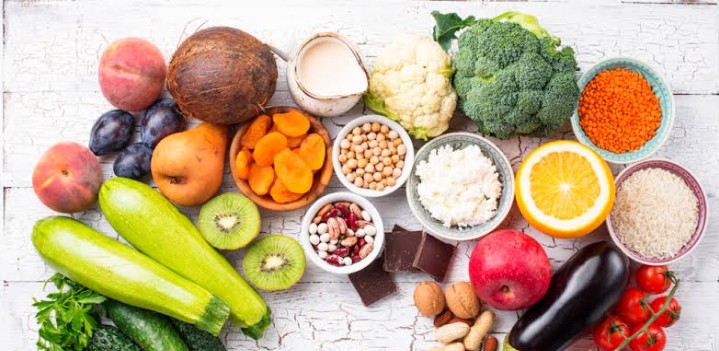
Low glycemic index foods include most veggies, fruits, lightly processed grains, and pasta made from both whole and refined grains.
Referring to the glycemic index can be helpful, but it shouldn’t be the only tool used to manage blood sugar. The glycemic index should be used together with carb counting and lifestyle changes like eating a balanced diet and regular exercise.