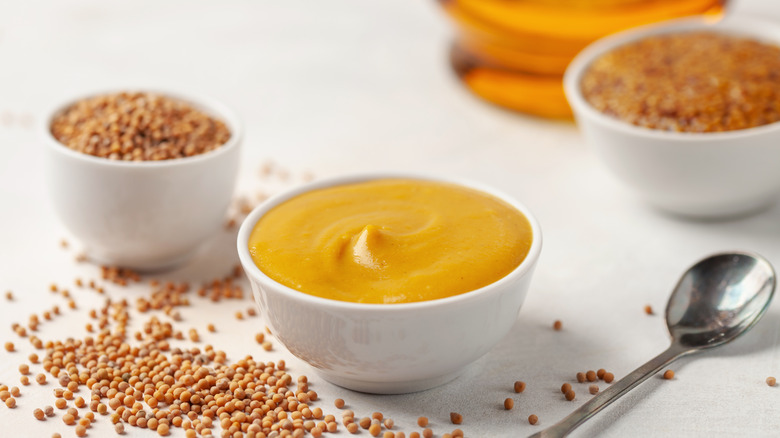

Mustard (mustard sauce) is one of the oldest sauces known to man. Its roots go back to ancient civilizations that used it to add rich and unique flavors to food. It's made from mustard seeds known for their unique taste and nutritional value mixed with vinegar andlemon andsalt and other special additions.
Mustard is used in many ways, both as a great addition to grilled dishes and salads, and as a key ingredient in many global sauces. It also has many health benefits because it's rich in useful nutrients andantioxidants.
In this article, we will learn about the health benefits of mustard, its negative effects on health, and how to prepare it at home.
Health benefits of mustard

Mustard is a healthful ingredient. It has several antioxidants that give great health benefits to the body, including the following:-
-
Fighting many types of cancer
-
Anti-inflammatory properties
-
Antibacterial, antiviral, and antifungal properties
-
Helps heal wounds
Also, mustard has calories that are low, making it a great alternative to high-calorie ingredients.
Antioxidants in mustard

Usually, small amounts of mustard are eaten as a spice, so it might not bring big health benefits. But, mustard is a low-calorie option compared to many high-fat spices, like mayonnaise.
Many different kinds of mustard seeds are used for various health purposes. For example, old herbal healers used white mustard seeds to improve voice by mixing them with honey.
Also, mustard contains two important antioxidants, which are Isothiocyanates and sinigrin.
The oil has Isothiocyanates, the oil that gives mustard its sharp and distinct taste, has anti-cancer abilities against many types, including breast cancer, andlung cancer,Digestive system cancer, and prostate cancer.
Besides that, isothiocyanates might also offer many other benefits, Including:-
-
Helping manage diabetes by improving control over blood sugar levels.
-
Lowering cholesterol levels the bad kind, which helps protect against heart and blood vessel diseases.
-
Positive effects on neurological conditions, like helping improve symptoms related to autism.
Sigrin is another antioxidant found in mustard. It's a compound that leads to isothiocyanates when broken down or crushed. Then enzymes turn it into isothiocyanates or mustard oil, Sigrin offers many health benefits including:-
-
Cancer fighting
-
Antibacterial, antiviral, and antifungal properties
-
Anti-inflammatory properties
-
Speeds up wound healing
Calories in mustard

A typical serving of mustard is one teaspoon. People rarely eat a lot of mustard because of its spicy, sharp, or salty flavor.
One prepared mustard serving (one small spoon) has about 3 calories. Most of these calories come from carbs, but since it's so low-cal, it probably won’t make much difference carbohydrates in your daily carb intake.
Choosing mustard and how to store it

You can easily find mustard in almost every grocery store. Yellow prepared mustard is usually in the spice aisle at most markets. If you want more exotic types, try specialty stores for mustard made with honey and hot peppers. You can also find different kinds with a unique texture and seeds.
Buy mustard in small amounts because it loses its special flavor over time and is used in limited quantities. So, it's not recommended to buy a big container since it might spoil. Once opened, mustard should be kept in the fridge for up to one year.
Mustard adds a strong and spicy flavor that goes well with meats, seafood, and can also be used in making salad dressings.
Possible negative effects of mustard

According to the US FDA, mustard is generally considered safe food. However, you should be careful when using it for medical or cosmetic purposes.
The natural medicine database reports that using white or black mustard on skin for long periods can cause burns, blisters, or sores. It also says that swallowing large amounts of black mustard seeds can seriously harm the throat and cause major side effects including Heart failure anddiarrhea drowsiness, breathing difficulties, coma, and it can lead to death.
Lastly, food allergies. Food allergies to mustard are rare. Still, eating mustard might cause some allergic reactions in some people. Symptoms can be mild or severe.
Usually, food allergy symptoms show up soon after eating mustard products. There might be tingling, rash, itching, breathing trouble, and other typical allergy signs.
How to prepare mustard at home

Here's an easy and healthy way to make mustard at home with simple ingredients.
Ingredients
-
4 tablespoons of mustard seeds (you can use yellow or black).
-
½ cup of white vinegar or apple cider vinegar.
-
¼ cup of water (or as needed).
-
1-2 teaspoons of sugar (optional).
-
½ teaspoon of turmeric (for golden color and flavor).
-
¼ teaspoon of salt.
-
A pinch of hot pepper (optional).
Preparation Method
-
Soaking the mustard seedsIn a small bowl, soak the mustard seeds in vinegar and water for 12-24 hours. This will soften the seeds and get them ready for grinding.
-
Grinding the seedsTransfer the mixture to a blender or spice grinder and grind until you get a smooth or coarse paste, depending on your preference.
-
Adding flavorsAdd sugar, turmeric, salt, and hot pepper to the mix. Stir well until everything is blended.
-
Adjusting the consistency: If the mix is too thick, add a little water gradually until you get the texture you want.
-
Storage: Transfer the mustard to a glass jar with a tight lid and keep it in the fridge. Let it sit for a day or two so the flavors balance and it tastes better.