Do you remember the last time you went on a long holiday, and when you came back, you decided to hit the gym thinking you could start working out again where you left off? Maybe you also recall feeling like you might not do well with your workouts and feeling sore for days after, because you'd taken a long break enjoying rest and eating freely.
Now think a bit about what you might face if you want to get back to your workouts after two or three months of home lockdown.
But if you kept up your workouts with the same intensity all this time, that's really great, and what we'll say here doesn't apply to you. we're talking mostly about those of us who didn't keep up the same workout intensity without our usual gym setups.
For example, if you try to jump back into working out too fast and hard, you might end up with painful muscle inflammation and feeling really bad.
So while you're getting ready to go back to the gym, here are 10 tips to keep you safe and avoid injuries that could stop you from working out for another two months. The tips are:
First: Reset your mind and organize your thoughts.

You need to reorganize your mindset before starting exercise again. The most important step to get back to your previous fitness level is to fully accept that you’re not at that level now. Don’t be negative if your weightlifting isn’t Instagram-worthy yet, or if running a mile feels like a big challenge now, even though it used to be just your warm-up. At the start, think about a short-term adjustment to your past workouts, celebrate small wins, and be proud while you keep making progress until you get back to your old fitness level.
Second: Start slow and gradually increase your effort

To avoid injuries or worse, you should start exercising slowly and gradually increase your performance over the first 8 to 10 sessions. Starting with high intensity or speed can cause physical injuries and mental setbacks. So take it easy and boost your confidence with each session until you get back to where you were before in a short time.
Third: Do an RPE system test

You can repeatedly test your body using the Rate of Perceived Exertion (RPE) scale called the Borg scale. It's a classification chart from 6 to 20 that shows how hard you feel any physical effort is. There’s also a simpler version from 0 to 10. Both relate well to your heart rate and give quick, reliable results on how your body reacts to your exercises. If your movements are slow, the results show 6 or 7 (1.2). If you keep high intensity, the scale points to 18 to 20 (8-10). This test is easy to use and needs no special tools. It gives a precise measure of how hard you’re working. So you should test often during workouts. If you hit high numbers, slow down until you reach the intensity you want gradually.
Fourth: Warm up before starting your workout routine

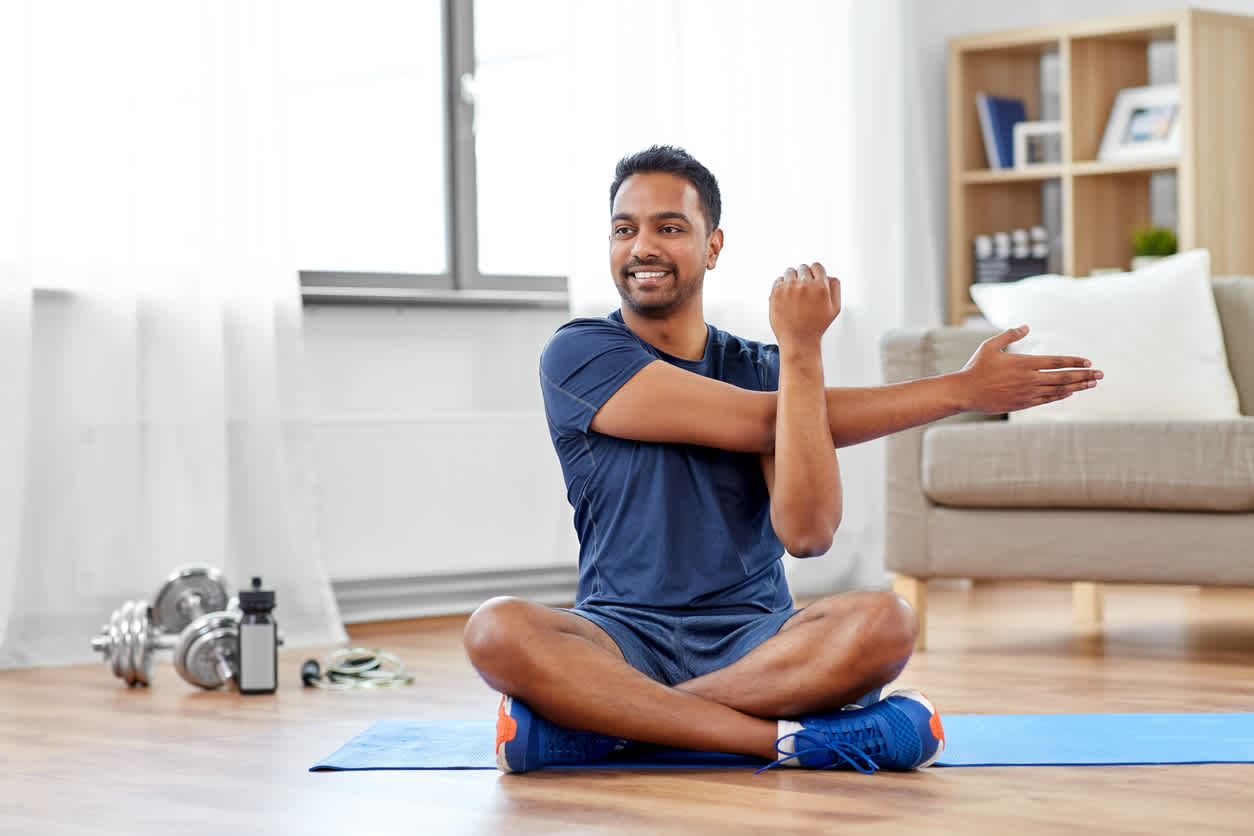
You need to take enough time to warm up properly before doing different workouts. Right now, since you've stopped exercising for a long time, you need to put in more effort. Think of warming up as a key part of your workout that you have to do every time, not just an option if you have time. Make time for it every session. You can use methods like dynamic warm-ups or planks. Warming up for 5 to 7 minutes can save you months of rehab from injuries you might avoid.
Fifth: Hydrate your body and recover

This advice isn’t new but very important nowadays. Hydrate your body by drinking fluids, especially water, starting now if you’ve been neglecting it. Don’t wait until mid-workout to start drinking. Following the rule of thumb, drink water equal to about half your body weight in ounces, which is great.
Just like you take enough time to warm up, you should also do the same during cooldown. Take enough time to calm down and do recovery exercises after your usual workouts. This helps you handle pain, increases your movement ability, calms your mind, and lets it focus on your recent wins during these exercises. Finally, relax your body systems and reward yourself for the good work you did..
Sixth: Set yourself a short time at first that you commit to.

To make sure you always stick to exercise without getting tired or lazy, you should commit to a short time where you exercise regularly without stopping. Then it will be easier to get through this time when doing workouts or keep it going. The important thing is not to try to cut it down. To get useful results from your workouts you must keep going and stay consistent.
Seventh: Always remember how you were before.

Always recalling how much effort you used to put in physically and your past fitness level, plus the noticeable results you can get from different exercises, should encourage you to quickly get back to your old self. Make this your motivation and excitement, not a reason to be lazy or discouraged.
Eighth: Add exercise time to your daily schedule.

You should make sure to do different workouts daily and not slack on sticking to them so you reach your goals faster. You can pick a specific time to do them based on your daily activity and free time. If you're busy in the evening, do them in the morning, and vice versa. If you're busy all day, 15 minutes is enough to do your daily exercises. Always remember doing a little is much better than doing nothing.
Ninth: Start the one-month challenge

It’s known that if you keep doing something for a month, it becomes a habit. So if you exercise daily for a month, it becomes your new habit, and then you’ll get the results you want. So you need to set your monthly goal and stick to doing the exercises you chose for yourself all month to reach that goal.
Tenth: Let someone join you when doing your workouts

It’s good to find someone who shares your fitness goals and wants to get fit too. So you can let your friend or a relative join you for your daily workouts. Besides the fun, it will really motivate you to keep going and get great results fast.
We were all sure that the day we get back to our gyms to do our favorite workouts would come for sure, and we’d be able to move like we used to before everything changed.
Now, since that day is almost here, you should follow these steps to protect yourself from injuries or worse while doing your exercises. It might take some time to get back to your old fitness level, but it’s really worth it.