


Surely you've heard about collagen and its great benefits for skin care and fighting wrinkles. Maybe you even have one or more cosmetic products with collagen as the main ingredient. But is collagen only important for skin care? And what exactly is it? In this article, we will answer everything about collagen and its many benefits, and other related stuff.
-
First: What is collagen?

Collagen is a protein found abundantly in the body, making up about one third of the body's total protein content. It's one of the main building blocks for bones, skin, muscles, tendons, and ligaments. Collagen is also present in many other body parts including blood vessels, the cornea, and teeth.
Collagen is like the glue that holds all parts of the body together. Actually, the word collagen comes from the Greek word (Kolla) which means glue.
-
Second: What are the types of collagen?
There are at least five types of collagen in the body, but there are four main types that the others come from: type one, two, three, and four. Here's what each type does and why it's important in your body:
- Type One :- This type makes up 90% of the body's collagen. It is made of dense fibers and is part of the structure of skin, bones, tendons, soft cartilage, connective tissue, and teeth.
- Type Two:- This type is made of loosely connected fibers and is found in flexible cartilage that lines the joints.
- Type Three :- This type supports the formation of muscles, organs, and arteries.
- Type Four :- This type helps with filtration and is found in the layers of the skin.
-
Third:- The importance of collagen for the body:-

Since collagen is part of many different body parts, it is very important for many areas of the body because it helps in:-
-
Giving the body's tissues the softness and flexibility that fit their function.
-
Giving cartilage the flexibility that fits movement, especially keeping joint flexibility intact.
-
Giving bones hardness and protecting them from fragility.
-
It helps keep skin flexible, fresh, and protects it from wrinkles and lines.
-
Fourth:- Nutrients that increase collagen production.

Collagen is one of the basic components in almost every part of the body, so you should eat a diet with nutrients that help increase collagen secretion.
All collagen is made from procollagen. The body makes procollagen by combining two amino acids, glycine and proline. This process needs vitamin C. You might help your body make important collagen protein by making sure you get some key nutrients in your diet, which are:-
-
Vitamin C:- Found in large amounts in citrus fruits, peppers, and strawberries.
-
Proline:- Found in large amounts in egg whites, wheat germ, dairy products, cabbage, and asparagus.
-
Glycine:- Found in large amounts in chicken skin and gelatin.
-
Copper:- Found in large amounts in sesame seeds, cocoa powder, cashews, and lentils.
Also, your body needs high-quality protein with essential amino acids to make new proteins. Meat, poultry, seafood, dairy, legumes, and tofu are all good sources of amino acids.
-
Fifth:- What things harm collagen levels?

You should know which habits hurt collagen levels in the body and avoid what you can. They are as follows:-
- Eating lots of sugar and refined carbs:
Sugar messes with collagen's ability to heal itself, so you should cut back on added sugar and refined carbs.
- Too much sun exposure:
UV rays can lower collagen production, so avoid too much sun.
- Smoking:
Smoking cuts collagen production, which can slow wound healing and cause wrinkles.
- Some immune disorders:
Certain autoimmune diseases like lupus can damage collagen.
- Getting older :-
As you get older, your body makes less collagen. One clear sign is skin that feels less firm and soft. Cartilage also gets weaker.
-
Sixth:- Natural food sources of collagen :-

Collagen is found in large amounts in everyday foods, like:-
-
Chicken skin :- Collagen is found in the connective tissues of animal foods.
-
Bone broth :- Bone broth is one of the richest collagen sources, made by boiling chicken or other animal bones.
-
Gelatin :- Gelatin is basically collagen, so it has very high levels of the amino acids needed to make collagen.
-
Seventh:- Collagen supplements:-

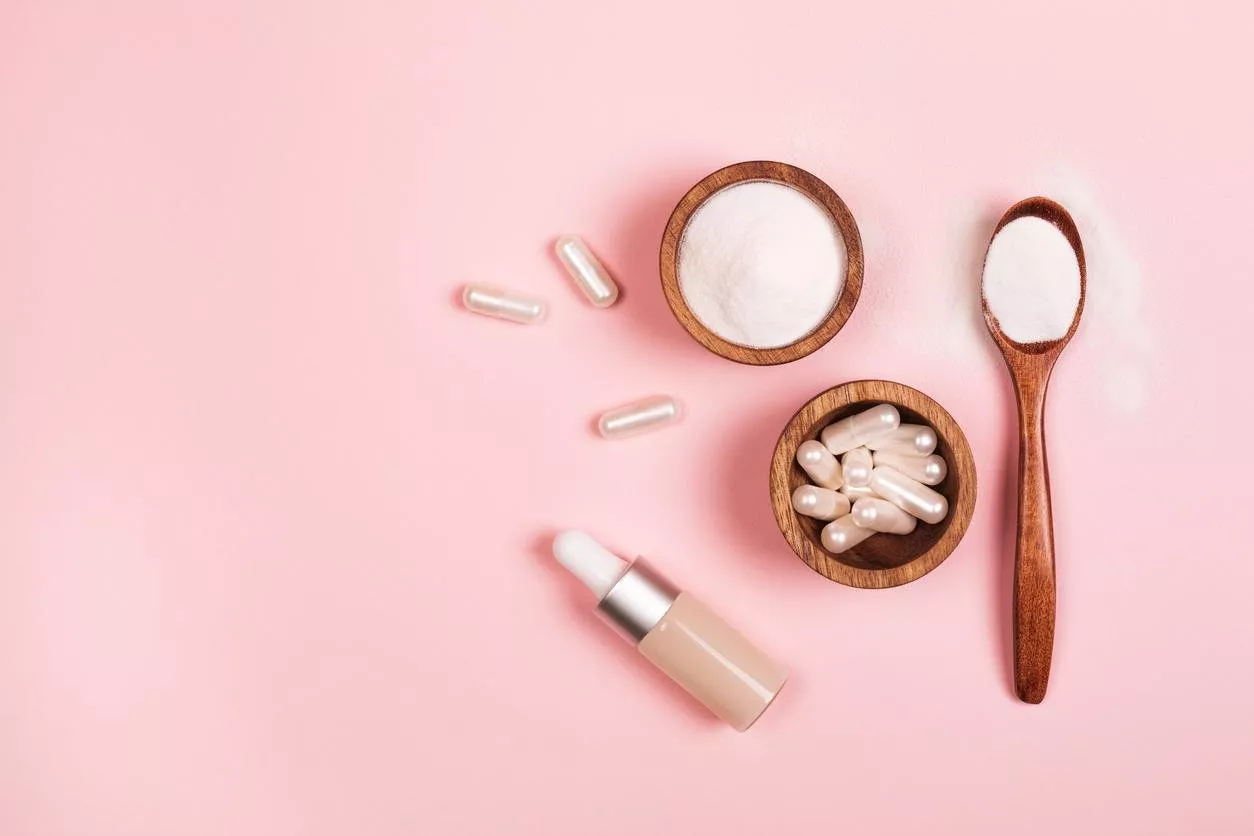
Because collagen is important and has many benefits, and it's famous for skin care and repair, many collagen supplements appeared. There are two popular types: water-soluble collagen (marine collagen) and gelatin.
Early studies on these supplements show they provide important benefits for many parts of the body like:
-
Increasing muscle mass.
-
Reducing the development of arthritis.
-
Improving skin look and flexibility by reducing lines and wrinkles.
So far, there isn’t much reliable info on how safe and effective collagen supplements are, but possible side effects include a bad taste, feeling heavy, and heartburn.
Also, if you're allergic to the source of the supplement, you might have an allergic reaction.
-
Eighth: How do collagen supplements work?

Collagen supplements might come as a powder you can easily mix into foods. You can mix it with juices, soups, and baked goods without changing their texture.
Gelatin can be used to make homemade jelly or gum. There are also high-quality collagen supplements like marine collagen made from fish skin.


