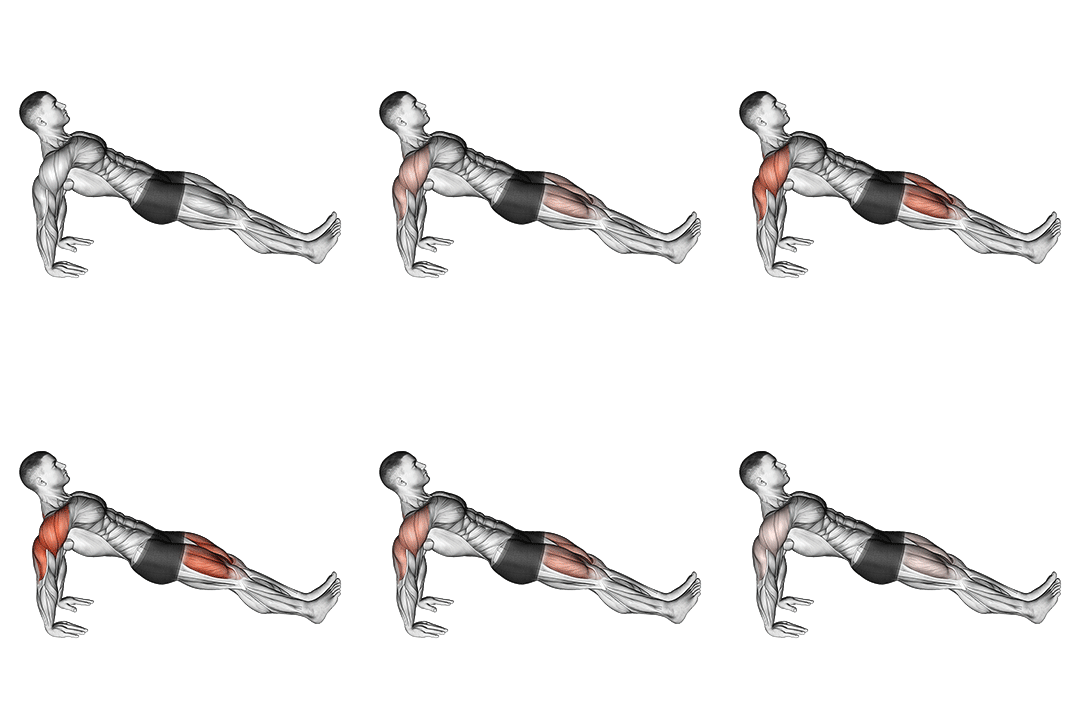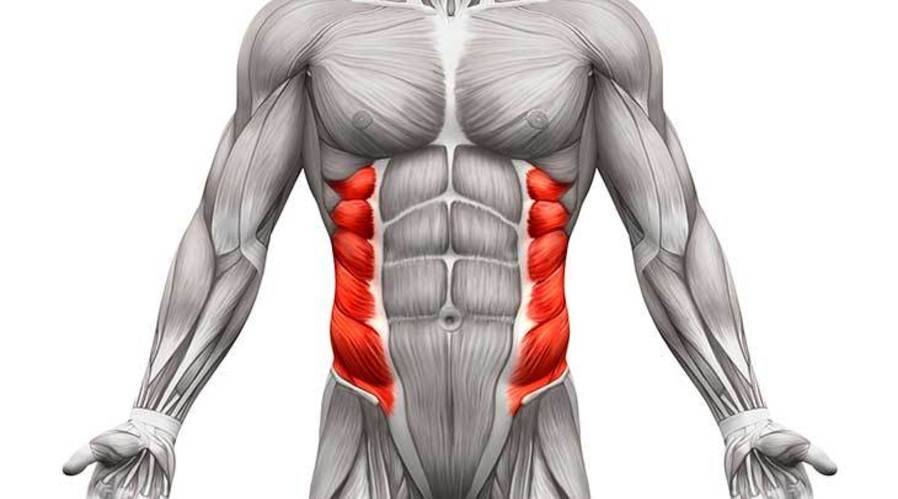
Oblique muscles are mainly two types: internal and external. They are a group of belly muscles that work together to form a firm muscular wall. This wall supports the spine and helps internal organs keep an upright position. It also protects organs by keeping them in their expected places. In this article, we will look at the detailed anatomy of the oblique muscles and their functions.
-
Basic anatomy of the core muscles oblique muscles :-
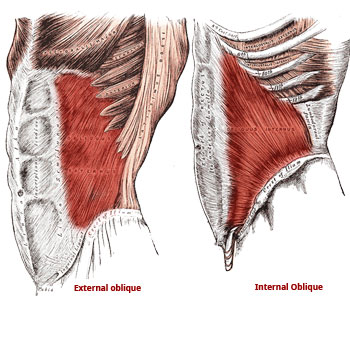
The belly muscles work together to create spine movement and also press on the internal organs. There are two types of oblique muscles: the external oblique and the internal oblique. They have many jobs. These oblique muscles make up two of the three muscle layers around the belly wall, with the third layer being the transverse abdominal muscle.
-
External oblique muscles :-
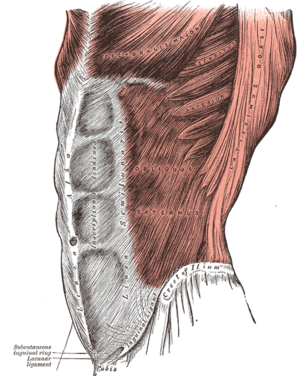
This is the outer muscle found on both sides of the body trunk. Its muscle fibers lie under the chest and belly skin, starting from the lower ribs down to the pelvis and hip bones. The muscle part includes the side of the belly wall.
These muscles help with various trunk movements. They mainly handle many jobs, like twisting the sides of the trunk, pulling the chest down, and turning the spine. So any strain or injury to these muscles can be very tiring.
- Function of the external oblique muscles :-
External obliques have many functions. It depends if the muscle contracts on one side only or on both sides. When working on one side, together with internal obliques, it rotates the trunk to the opposite side. When working with back muscles, it helps bend the trunk sideways.
When both sides contract, it bends the trunk forward. This also strengthens the abdominal wall and increases positive pressure inside the abdomen. This pressure helps with various body processes like breathing out, pooping, peeing, and childbirth.
-
Internal oblique muscles :-
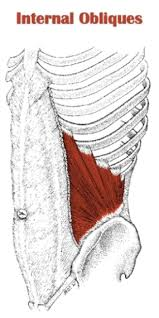
They are wide, thin muscle sheets on the sides of the belly, arranged vertically at right angles to the external obliques. They have multiple origins and are divided into front, back, and side fibers based on where they start. These muscles work against the diaphragm, reducing the upper chest cavity size during exhale. They also help rotate and bend the body sideways.
- Function of the internal oblique muscles:-
Internal obliques, along with other abdominal muscles, help keep normal pressure in the belly wall. Their contraction protects and supports the area. When both sides contract, the pressure inside the abdomen increases.
These muscles also support some body functions like exhaling, pooping, and peeing, so weakness in these muscles raises the risk of getting a belly hernia.
-
Here is a variety of exercises to strengthen the oblique muscles:
-
Heel tap exercise:
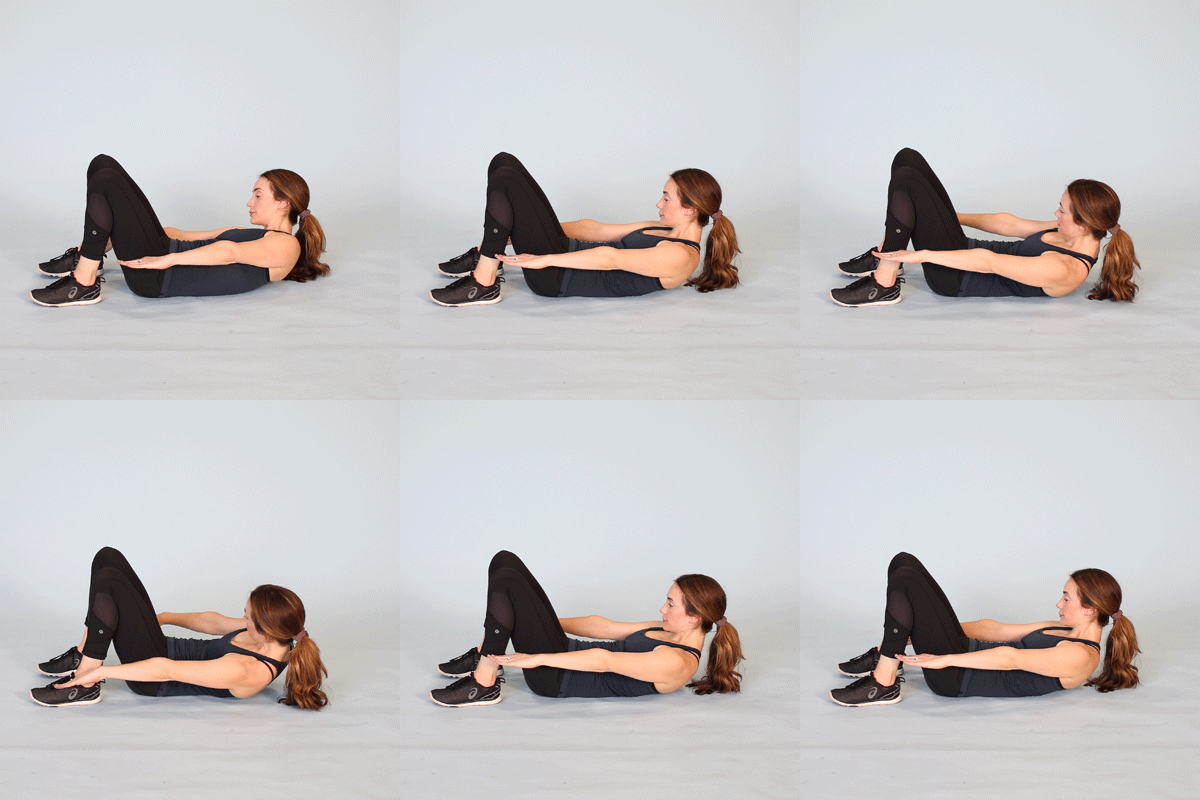
The Heel tap targets the inner and outer oblique muscles.
- How to do the exercise:
-
Lie on your back with your knees bent and feet flat on the floor.
-
Stretch your arms out, lifting them in line with your torso.
-
Breathe and start lifting your head and upper body off the ground.
-
Begin moving your upper body and head using your trunk muscles.
-
Try to reach to your left side, and you can touch your left heel in this position.
-
Go back and repeat on the other side.
-
Repeat this exercise 8-12 times on each side, or as you can manage.
2. Side plank with a reach under exercise :-

Adding Side plank with a reach under to your routine gives more twisting motion to target the oblique muscles.
- How to do this exercise :-
-
Start by lying on the floor on your left side.
-
Lift yourself up on your left forearm, holding your upper body supported on your forearm.
-
Bend your knees at a 45-degree angle, placing your right leg over your left leg.
-
Stretch your right arm upwards.
-
Then lower your right arm towards your body inward until it reaches your left side, twisting inward.
-
Breathe well and repeat this on the other side.
-
Repeat this exercise 8-12 times, depending on your ability.
3. Side plank exercise :-
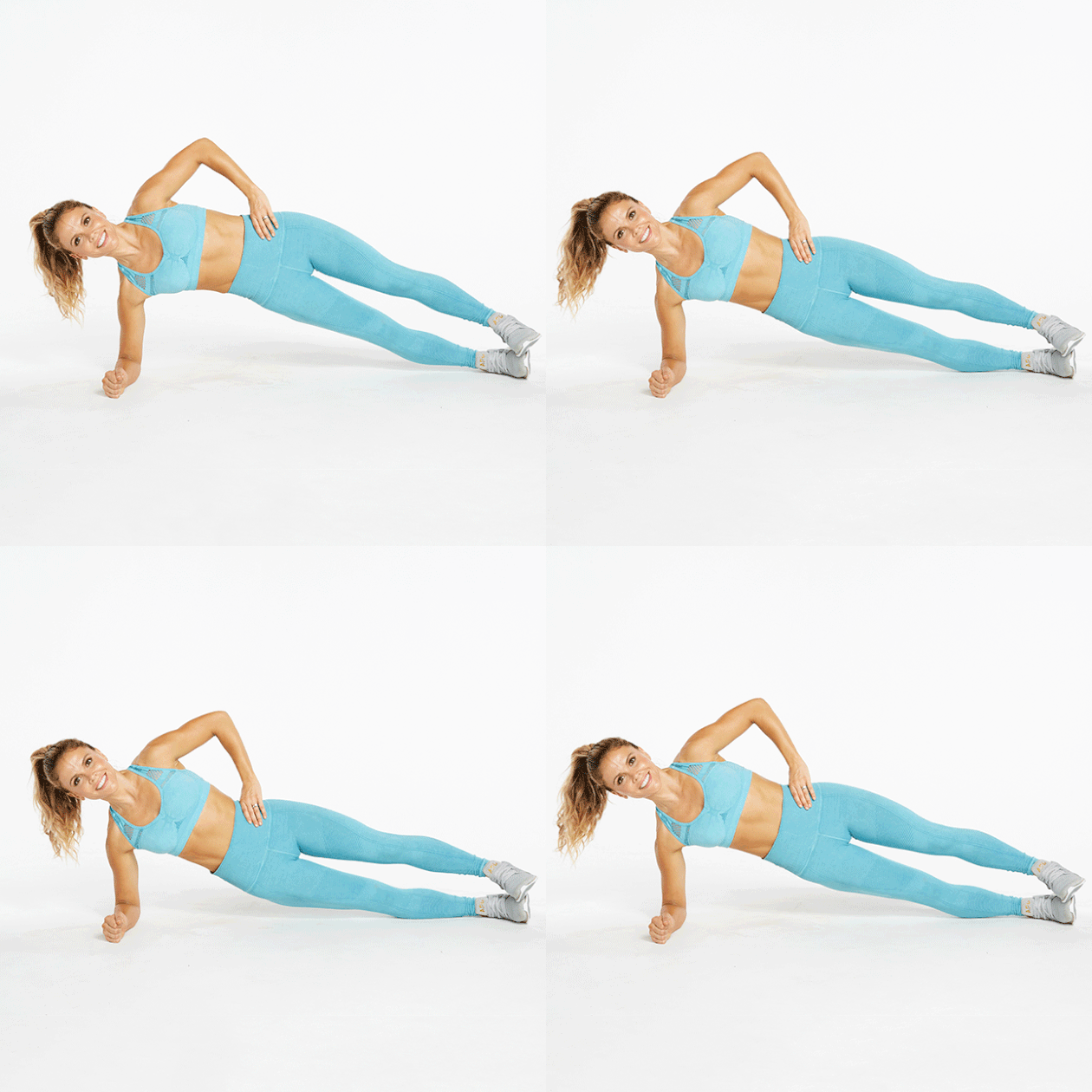
The Side plank targets the oblique abs and upper body muscles. It also works the shoulder and middle glutes muscles.
- How to do the exercise :-
-
Start by lying on the floor on your right side.
-
Rise onto your right forearm, holding your upper body up on your right forearm.
-
Bend your knees at a 45 degree angle, with your left leg over your right leg.
-
Your body should form a straight line from your head to your feet.
-
Use your oblique muscles to pull your left hip up, letting your left arm rest on your body.
-
Hold this position for a while, then switch to the other side.
-
Repeat this exercise 8 - 12 times, or as you can.
4. Cross-body mountain climber exercise :-

- How to do this exercise: -
-
Start the exercise in a high plank position.
-
Lift your glute muscles a bit from their usual position.
-
Keep your legs fixed under your shoulders.
-
Move your left knee forward toward your right elbow, keeping the rest of your body still.
-
Return to start, then repeat on the other side.
-
Repeat this exercise 8 - 12 times, or as much as you can.
5. Bird Dog exercise :-
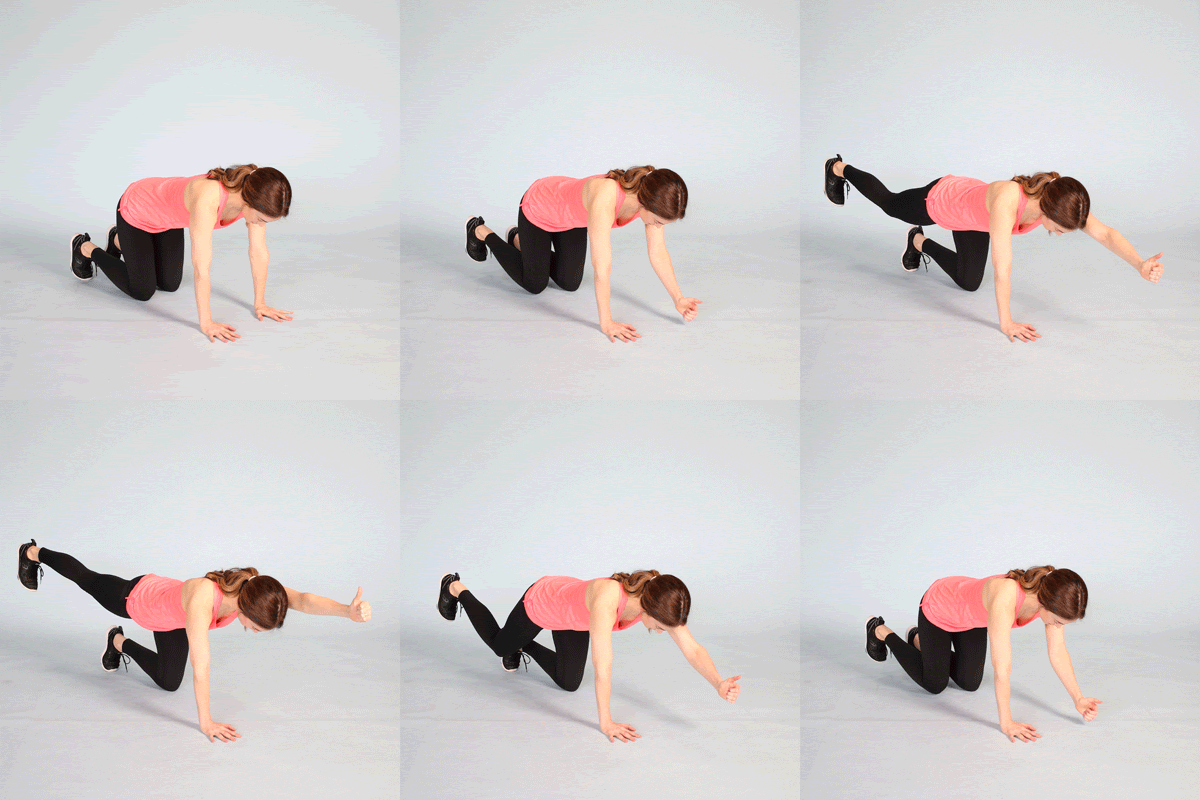
The Bird Dog exercise builds strength in all your core muscles.
- How to do this exercise:
-
Start by getting down on the floor on your hands and knees.
-
Your hands should be shoulder-width apart, and your knees spaced the same as your hands.
-
Raise your right hand with your thumb pointing up, and keep your arm straight.
-
At the same time, slowly lift your left leg so it’s behind you and parallel to the floor.
-
Hold this position for two seconds, then lower and switch to the other arm and leg.
-
Repeat this exercise about 8-12 times, or as much as you can.