
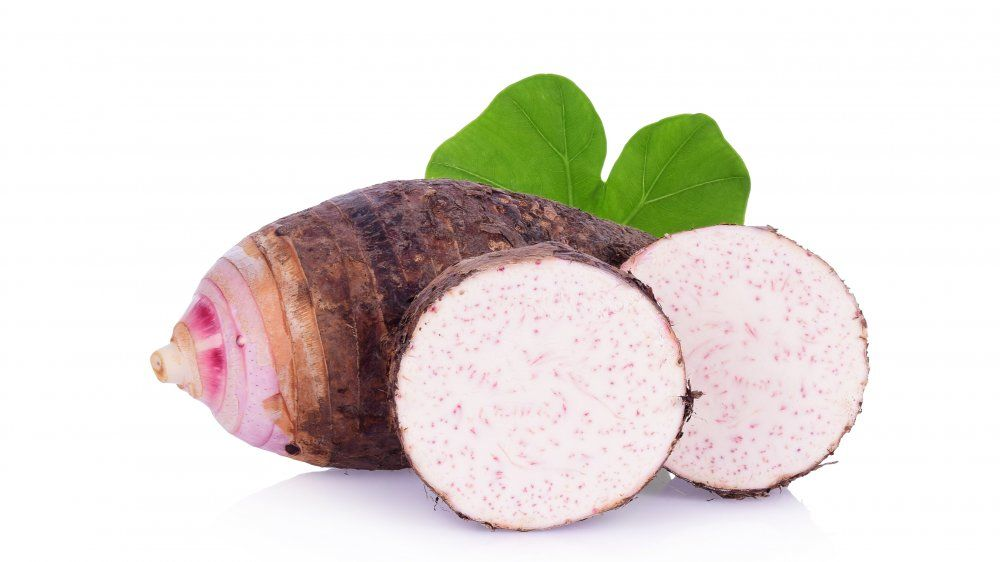
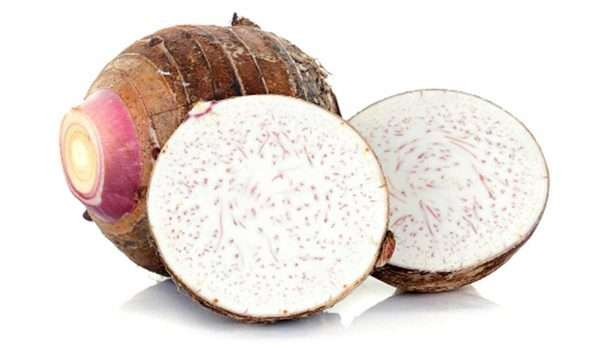
Taro is one of the starchy vegetables the root vegetables originally grown in Asia, but now found worldwide. Taro has a brown outer skin and white flesh with some purple spots. When cooked, it tastes mildly sweet with a texture like potatoes.
Taro is a great source of dietary fiber and other nutrients. It also offers various possible health benefits. which we'll cover in this article.
-
Nutritional values in taro :-
Here's the nutritional value in a 100g serving of taro:-
| Calories | 112 calories |
| Fat | 0.2 grams |
| Carbohydrates | 26.46 grams |
| Protein | 1.5 grams |
| Sodium | 11 milligrams |
| Sugar | 0.4 grams |
| Fiber | 4.1 grams |
-
Carbohydrates :-
A 100 gram serving of taro contains about 26.4 grams of Carbohydrates, and about 4 grams of fiber, and it contains natural sugar estimated at about 0.4 grams.
Taro contains two main types of carbohydrates which are dietary fiber and resistant starch, and both types are not digested or absorbed by humans.
-
Fat :-
Taro is considered almost fat-free food fatA 100 gram serving of taro has about 0.2 grams of fat, considering that fat can increase during cooking.
-
Protein :-
A 100 gram serving of taro has about 1.5 grams of protein.
-
Vitamins and minerals :-
Taro contains many vitamins and minerals as follows :-
Manganese Contains 30% of the recommended daily value.
Vitamin E Contains 19% of the recommended daily value.
Potassium Contains 18% of the recommended daily value.
Copper:Contains 13% of the recommended daily value.
Phosphorus Contains 11% of the recommended daily value.
Magnesium Contains 10% of the recommended daily value.
So taro has good amounts of various nutrients that not everyone gets often, but you can get them all from just one food: taro.
-
Health benefits of taro:
Since taro has many vitamins and minerals, plus other plant compounds and lots of antioxidants, it has many health benefits, Here are some of them :-
-
Help in controlling blood sugar :-
Even though taro is a starchy vegetable, it contains two types of carbs that help control blood sugar: fiber and resistant starch.
Fiber is a carbohydrate that the body can't digest, so because it's not absorbed, it doesn’t affect blood sugar levels. It also helps slow down digestion and the absorption of other carbs, preventing big spikes in blood sugar after meals.
Studies found that diets rich in fiber, hitting up to 42 grams daily, can reduce blood sugar levels by about 15 mg/dL in people with diabetes type 2.
Taro also has a special kind of starch called resistant starch, which the body can’t digest either, so it doesn’t raise blood sugar. Around 12% of the starch in cooked taro is resistant starch, making taro one of the best sources of these nutrients.
-
Reducing the risk of heart disease :-
Fiber and resistant starch in taro may also help reduce heart disease risk. Studies found people who eat more fiber tend to have lower heart disease rates.
Both fiber and resistant starch work to lower cholesterol in the blood, which is linked to heart and blood vessel diseases.
-
Cancer-fighting properties :-
Taro has compounds called polyphenols with various health benefits, including lowering cancer risk. They can trigger programmed death of cancer cells.
So taro can stop spread of some cancers like breast cancer and prostate cancer.
-
Helping with weight loss :-
Because taro is a good fiber source, it helps keep body weight healthy and aids weight loss. Studies show people eating more fiber tend to weigh less and have less body fat.
This might be because fiber slows stomach emptying keeping you full longer, reducing calories you eat during the day, which leads to Weight loss.
-
Good for gut health :-
Fiber and resistant starch in taro are good for gut health, because the body doesn’t digest or absorb fiber and resistant starch. So they stay in the gut, and when they reach the colon they feed the good bacteria.
Good bacteria create short-chain fatty acids that feed the cells lining the gut, helping keep them healthy and strong.
Research also shows eating fiber and resistant starch can boost and help protect against inflammatory bowel diseases and colon cancer.
-
Allergy :-

Even though colocasia has many health benefits, do not eat it raw. It has calcium oxalate compounds that are toxic if not cooked. The danger goes away once it's cooked.
Also, some people might have allergic reactions to colocasia. This can show up as severe itching and a skin rash.
-
Varieties :-

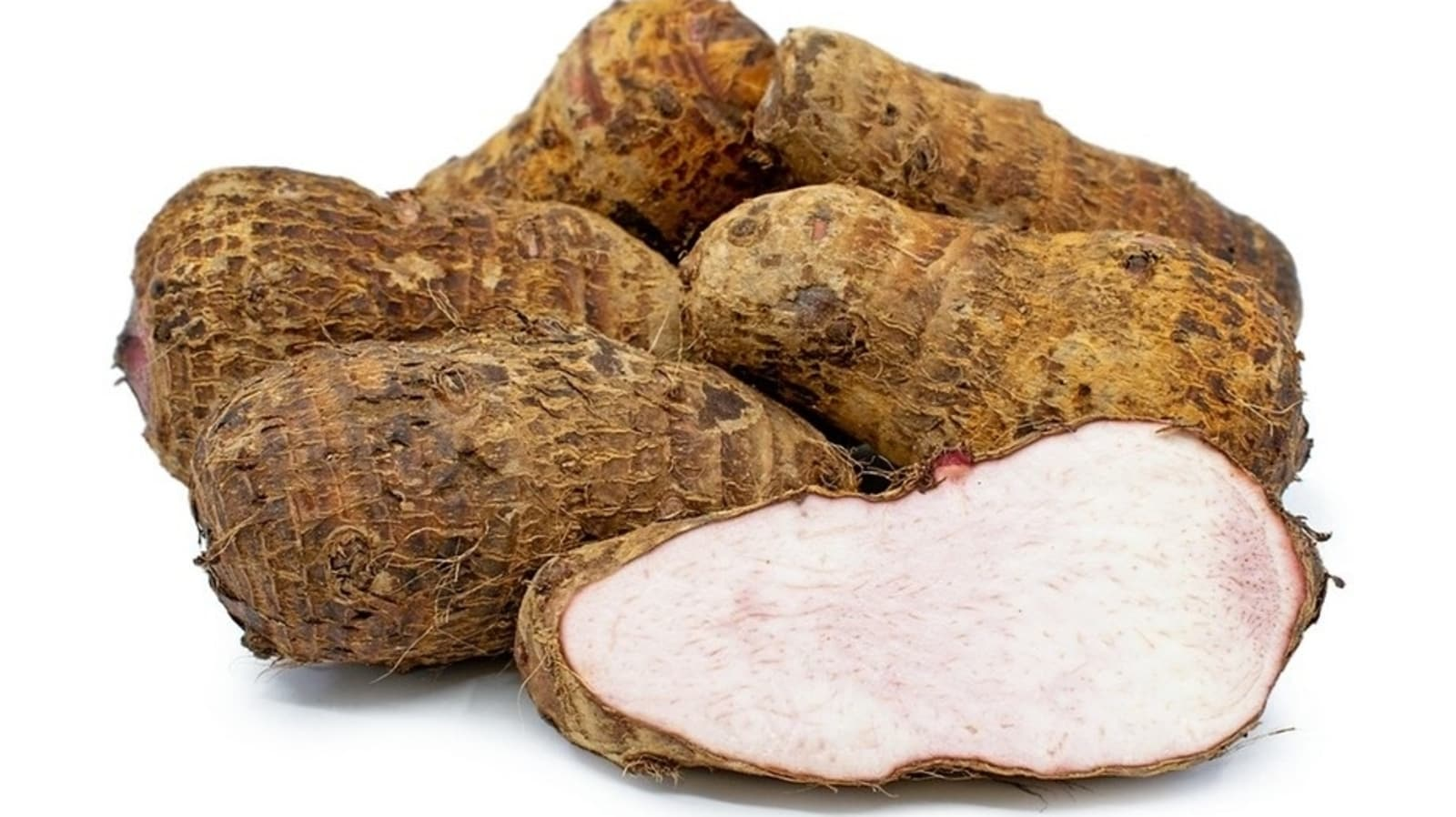
Colocasia comes in many types, but two popular ones are Egyptian and American colocasia. The American type has a smaller root and small leaves with white flesh.
The Egyptian colocasia is known for a larger root, big leaves, and purple-colored flesh.
-
Preparation method :-

Colocasia is versatile and easy to add to different diets. It has a starchy texture and a mild, slightly sweet taste like sweet potatoes, so it works in sweet and savory dishes.
Some common ways to enjoy colocasia include :-
-
Taro chips :- Slice the taro thinly and bake or fry it.
-
Mashed taro :- Steam the taro and make it into a purple-colored mash.
-
Taro cakes :- Mix cooked taro with spices, then fry in a pan until crispy.
-
In soups and stews :- Cut taro into cubes and use in broth dishes.
-
Taro Cake The local taro paste is baked inside a butter dough for dessert.


