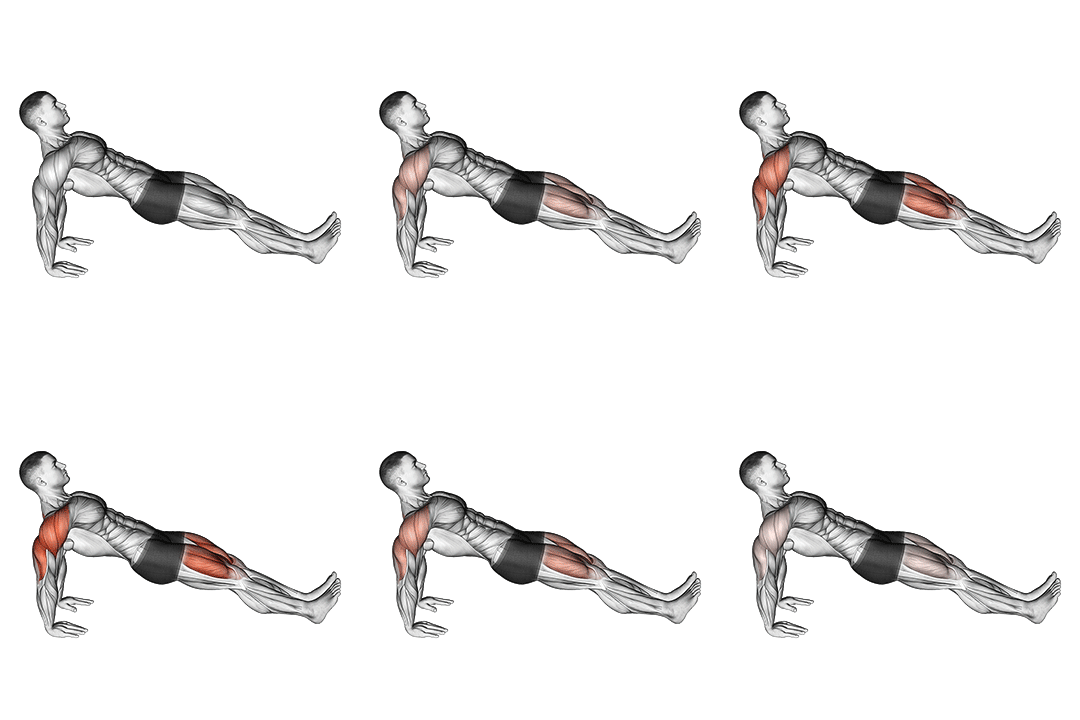
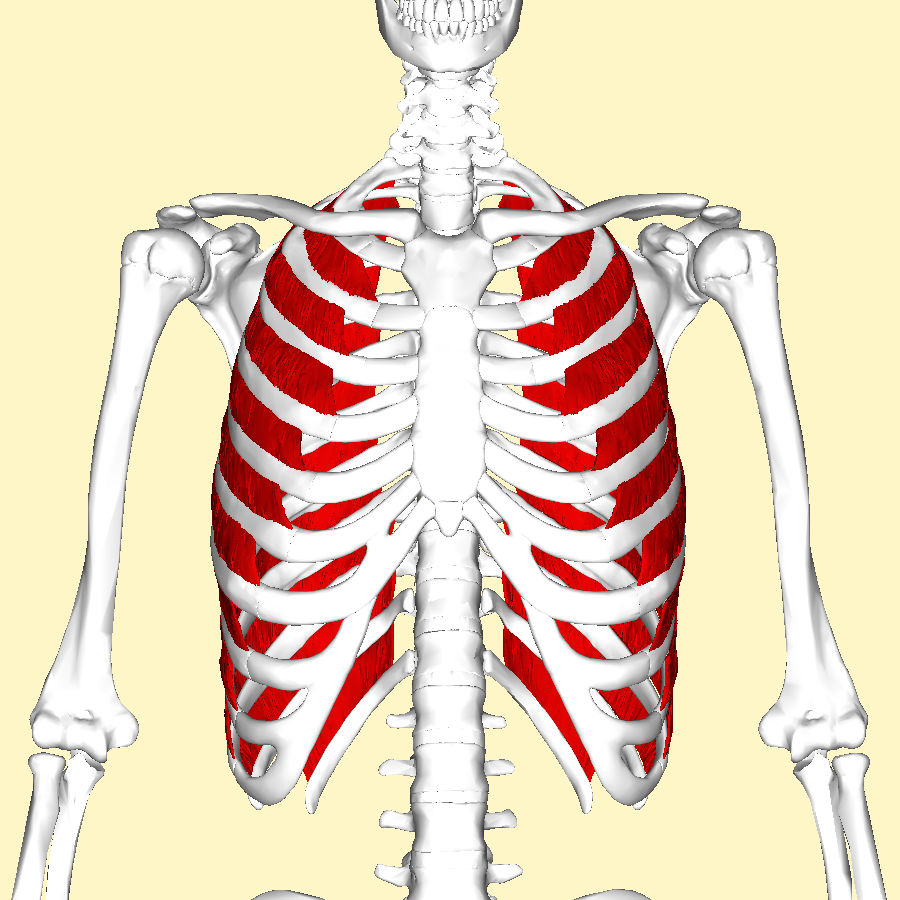
The intercostal muscles are a group of chest muscles found between each two ribs. They create and move the rib cage wall. They lift the ribs and expand the chest cavity, divided into three groups :-
-
The external intercostal muscles.
-
The internal intercostal muscles.
-
The deep intercostal muscles.
These three groups support the ribs, and all are breathing muscles. They mainly help with breathing: the spaces between the external intercostals help inhale, while the internal and deep intercostals help exhale.
-
Here’s the anatomy of the different intercostal muscle groups :-
-
First :- the external intercostal muscles :-

The external intercostal muscles are the most surface muscles. They stretch from the back part of the ribs to the front. They start at the lower edge of the first rib and insert into the upper edge of the rib below.
The external intercostal muscles get blood flow from the anterior and posterior intercostal arteries.
Function of the external intercostal muscles, These muscles lift the ribs during inhaling.
-
Second :- Internal intercostal muscles :-
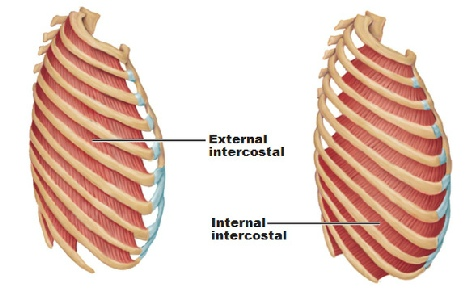
The internal intercostal muscles form the middle layer of the intercostal muscles. They stretch from the front of the ribs to the back. They start from the lateral cavity of the first rib and insert into the upper edge of the rib below.
These muscles get blood the same way as the external intercostals, from the anterior and posterior intercostal arteries, also from the internal thoracic arteries and muscular arteries.
Function of the internal intercostal muscles They lower the ribs during exhalation.
-
Third :- Innermost intercostal muscles :-
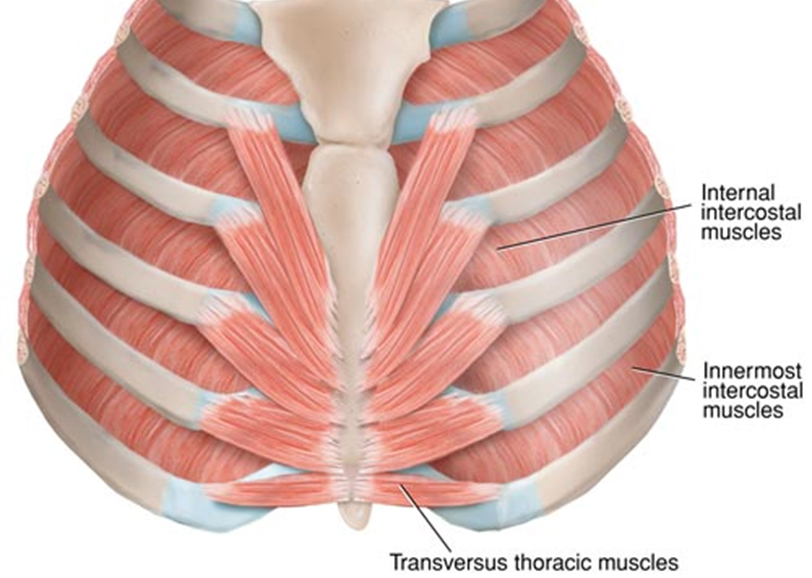
The innermost intercostal muscles start from the cavity of one rib at the back and attach to the origin of the internal intercostal muscles. They work smoothly with the internal intercostal muscles and insert at the upper edge of the rib below.
The blood vessels and nerve supply to the innermost intercostal muscles follow the same pattern as the internal intercostal muscles. Blood flow comes from the anterior and posterior intercostal arteries.
Function of the innermost intercostal muscles They help depress the ribs during exhalation.
-
Here is an exercise table for the intercostal muscles :-
-
Breathing Exercise :-

Breathing exercises that slowly fill the lungs with air help expand the chest and work the intercostal muscles.
- How to do the exercise :-
-
Sit or stand keeping your back straight.
-
Take a full breath from the bottom of your lungs.
-
You can breathe from your diaphragm by slowly expanding your belly muscles as you inhale.
-
Push the air out of your lungs using the same muscles.
-
Repeat the breathing 5-10 times.
2. Gate pose exercise :-
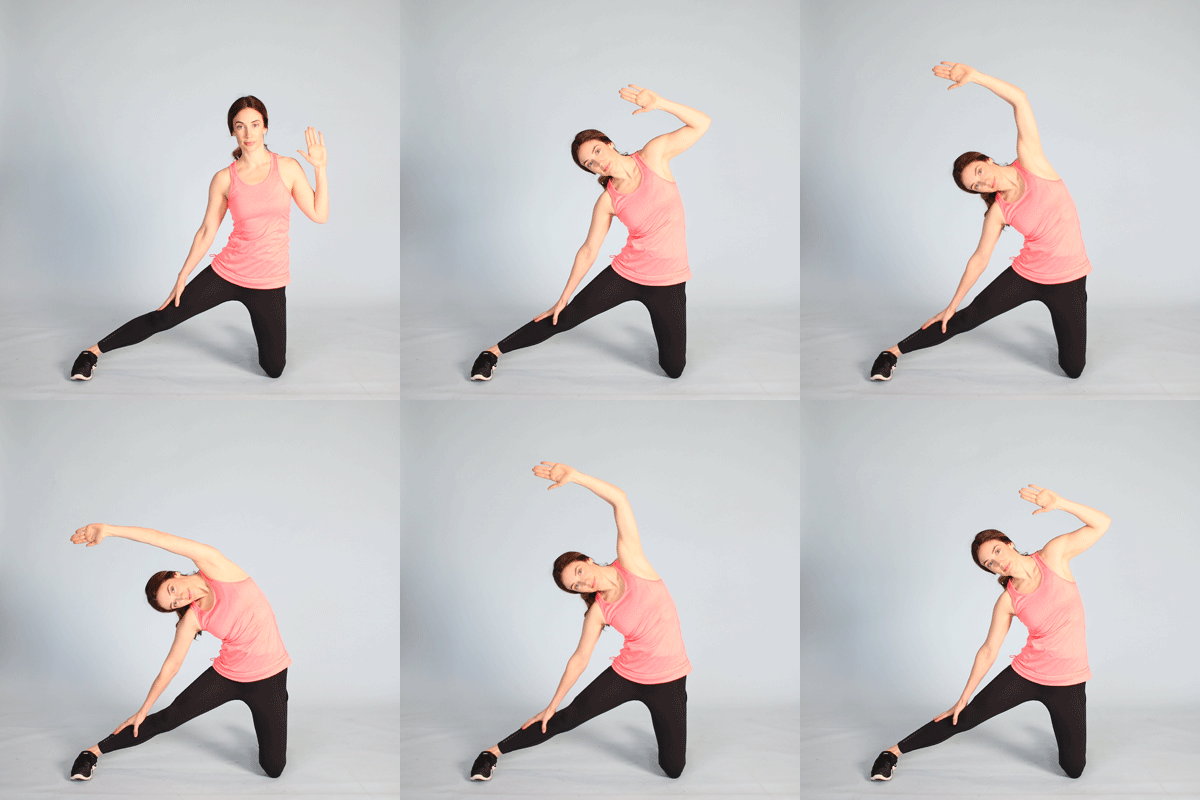
It's a stretch where you extend your ribs out to the side of your torso.
- How to do the exercise :-
-
Lay a mat flat on the floor to do the exercise comfortably.
-
Get on both knees and stretch your right leg straight out to the side.
-
Stretch both arms out to the sides.
-
Bend your upper body to the right so your right arm rests on your stretched leg.
-
Stretch your left arm over your head as far as you can till you feel a stretch in your left ribs.
-
Hold this position for 15 - 30 seconds.
-
Repeat this exercise on the other side.
3. Forward stretch exercise :-

This exercise is used to stretch the rib muscles in the back of the trunk.
- How to do the exercise :-
-
Sit on the floor, with your left leg straight out in front of you.
-
Bend your right leg until the sole of your foot touches your knee.
-
Lean forward as far as comfortable, and touch the palms of your hands to the floor if possible.
-
You should feel a stretch in the rib back muscles on the left side.
-
Hold this position for 15 to 30 seconds.
-
Repeat on the other side.
-
How to avoid rib muscle strain:
It can be really hard and painful to breathe when your rib muscles are injured or strained, so it's recommended to stop smoking to avoid extra breathing problems while the muscles heal. Also try to avoid secondhand smoke as much as you can.
While sometimes pressing on strained muscles is advised, it’s not recommended for rib muscle strain because forcefully wrapping the chest can make breathing harder and might cause bruises or worse injury or strain.