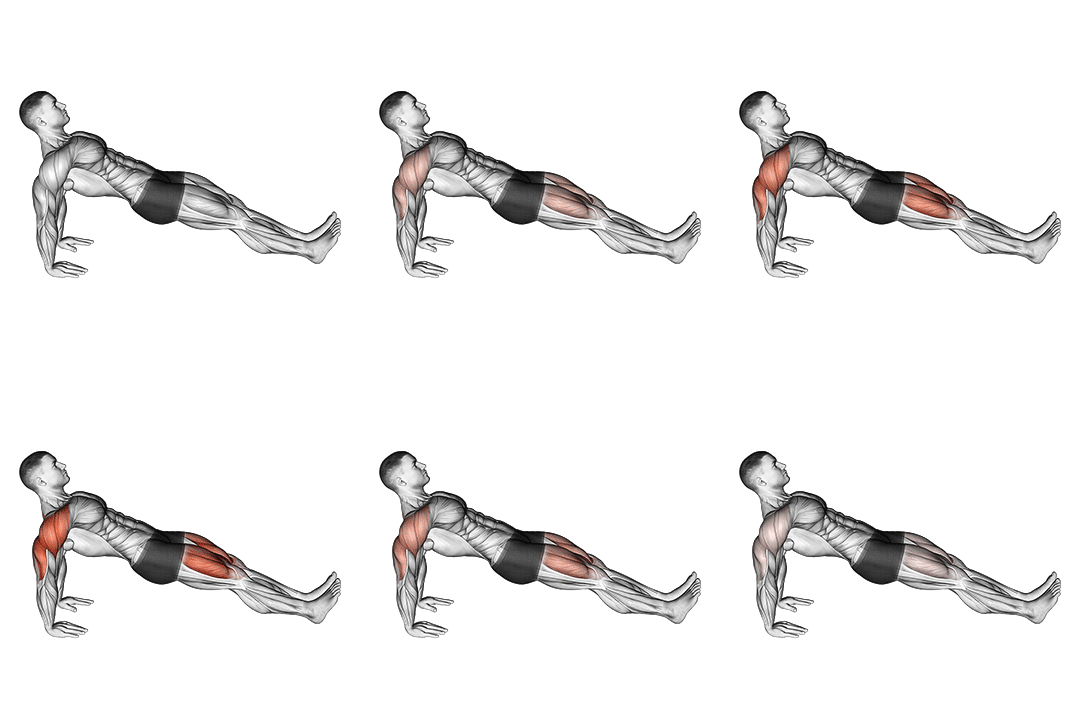
The back is the most sensitive area of your body for pain and injuries. Fitness experts often recommend keeping it straight during different exercises so it doesn't get hurt or damaged. To better understand the back muscles, where they're located, and how to boost, strengthen, and protect them from injury and severe pain. Let's go over the anatomy of these muscles and the main exercises that improve their function and health.
First: upper and middle back muscles
Infraspinatus muscle:

This muscle is in the outer shoulder area and is the main mover responsible for rotating the shoulders and stabilizing the upper arm bone. It connects the shoulder blade to the upper arm bone. That's why it's also called the scapulohumeral muscle. Part of it is visible on the body surface, while the rest is deeper under other muscles.
Latissimus dorsi muscle:

This muscle is on both sides of the spine and stretches from below the shoulder to the pelvic bones. It handles several functions like stabilizing the back, especially when moving the shoulder bones. It mainly works on the shoulder joint and helps your right and left sides twist right and left. It's the biggest and widest muscle in your upper body.
Levator Scapulae muscle:

It's one of the deep shoulder muscles, shaped like a belt, located between the shoulder and neck. Its role is on the shoulder blade and neck spine. This muscle lifts the shoulder and is known as a central, vertical, and back muscle. It starts from the first four neck vertebrae.
Rhomboid muscles:

There are two of these muscles, shaped like a rhombus, found in the back area. They are the major rhomboid and minor rhomboid muscles. They connect the shoulder bones to the back vertebrae and act as main movers for shoulder retraction and downward shoulder rotation. They are also an important part of the deep vertical back central muscles.
Serratus Anterior muscle:

This muscle is the main mover for shoulder extension and upward rotation. It also stabilizes the shoulder and protects the shoulder blades from rubbing on the ribs during movement or rest. It's classified as a front vertical central muscle. It connects the shoulder to the top eight ribs. Most of it lies deep around the shoulder blade and under the shoulder, including parts of the chest and broad back muscles.
Subscapularis shoulder muscle:
It's a large triangular muscle located on the lower side of the shoulder blade. It acts mainly on the shoulder joint as the primary mover for internal shoulder rotation. It also helps stabilize the shoulder. It starts from the front of the shoulder blade.
Supraspinatus muscle:

This muscle connects the shoulder bones to the upper arm bone. It also helps stabilize the shoulder. It sits above the spine's ridge and extends sideways. It's the most commonly injured muscle when this area gets hit.
Teres Major muscle:

This muscle is one of the inner shoulder muscles. It doesn’t cover any other muscle or go deeper into one. You can easily see it on the body surface. It lies inside the body above the wide back muscle and at the lower corner of the shoulder.
Teres Minor muscle:

This muscle works with the shoulder joint. It controls the joint’s external rotation along with the subscapular muscle. It also helps keep the upper arm bone’s head stuck in the shoulder socket. So it’s part of the shoulder-arm muscles. It’s located just under the lower part of the ridge and above the teres major muscle.
Top 5 exercises for the upper and middle back muscles:
Press Up exercise:

- Lie face down on the floor with your body supported on your elbows, your upper body lifted off the ground while your legs are stretched out behind you.
- Breathe deeply to fill your chest, hold for 5 seconds, then exhale slowly and try to keep your body as relaxed as possible.
- Repeat this 10 times, and gradually practice until you can hold this position for 30 seconds.
- At advanced stages, you can support yourself on your hands instead of your elbows.
Cat , Camel Pose Exercise:

- Get on all fours like a cat pose, then lift your back up without moving your limbs, like a camel pose.
- Hold this position for 5 seconds, then return to the cat pose.
- Repeat this 10 times before moving on to the next exercise.
Bird Dog Exercise:

- Get on your hands and knees with your arms straight down to the floor and your legs at a right angle.
- Lift your right arm forward and stretch it out while lifting your left leg and stretching it back.
- Repeat these steps switching sides until you complete 10 reps.
Corner Stretch Exercise:

- Stand facing a corner between two walls, then raise your arms to your sides so they form a right angle with elbows a bit lower than your shoulders, and press your arms against the walls.
- Bend your upper back slightly forward until you feel a stretch, keeping the rest of your body still.
- Return to your original position after 30 to 60 seconds.
- Repeat this exercise 3 to 5 times daily.
Prone Cobra exercise:

- Lie on your stomach with your forehead touching the floor, arms resting on your palms, slightly bent, and stretch the rest of your body.
- Lift your shoulders and stretch your upper back muscles up so your arms are straight up off the floor, keeping the rest still.
- Hold this position for 10 seconds before returning to your starting position.
- Repeat these steps for 10 reps.
Second: Lower back muscles
Erector spinae muscle:

This muscle is made of three inner muscles standing along both sides of your spine. They run down your back and help it stretch and rotate both ways. Depending on their position by the spinal bones, they get different names. The ones along the lower back bones are called lumbar extensors, and the ones along the middle back bones are called thoracic or upper extensors.
Top 5 key exercises for upper and middle back muscles:
Bridges Exercise:

- Lie on your back on the floor with your legs straight and your arms resting straight by your sides.
- Lift your lower back muscles off the floor by raising your hips and legs, keeping your feet grounded.
- Hold this position for a few seconds then lie back down fully on the floor.
- Repeat these steps 15 times with a one-minute rest in between, doing 3 sets.
Knee to Chest Stretching Exercise:

- Lie flat on your back with your body fully straight.
- Bend your right leg, hold your knee with your arms, and place it on your tight chest while your spine is resting on the floor. Hold this position for 5 seconds before switching legs.
- Repeat this exercise 2-3 times daily.
Superwoman Exercise:

- Lie on your stomach with your legs and arms extended at the same level, so both legs are parallel and both arms are parallel too.
- Lift your legs and arms off the ground at the same time for a few seconds, then go back to the starting lying position.
- Complete 10 reps of this exercise before moving to another exercise
Rotational Stretching Exercise:

- Lie on your back with your arms stretched out beside your body at shoulder level, and bend your knees upwards.
- Keep your upper body fixed on the ground while turning your legs to the right, hold this for 5-10 seconds, then return to the original position. Then turn your legs to the left and repeat the same steps.
- Repeat this exercise 2-3 times daily.
Pelvic Tilts exercise:

- Lie on the ground face-up, arms stretched out beside your body, bend your knees upwards, and press your feet into the ground.
- Press the lower part of your back into the ground so that your tailbone tilts slightly (lower back).
- Take a deep breath, filling your belly completely without sucking it in, while tightening your abdominal muscles.
- Pull your belly button inward and upward against the direction of the breath entering your body using your abdominal muscles.
- Keep breathing and fill your chest with air till your stomach feels full all the time.
- Repeat these steps daily until you slowly reach 30 reps.
And you can here learn more about exercises designed to strengthen and activate your back muscles.