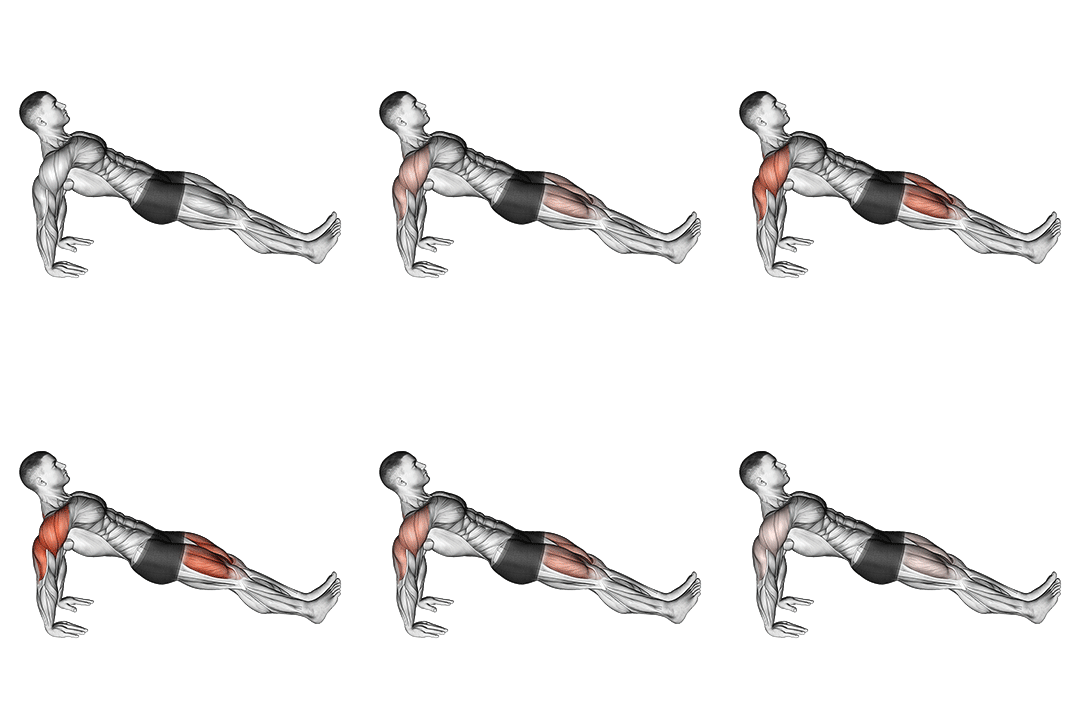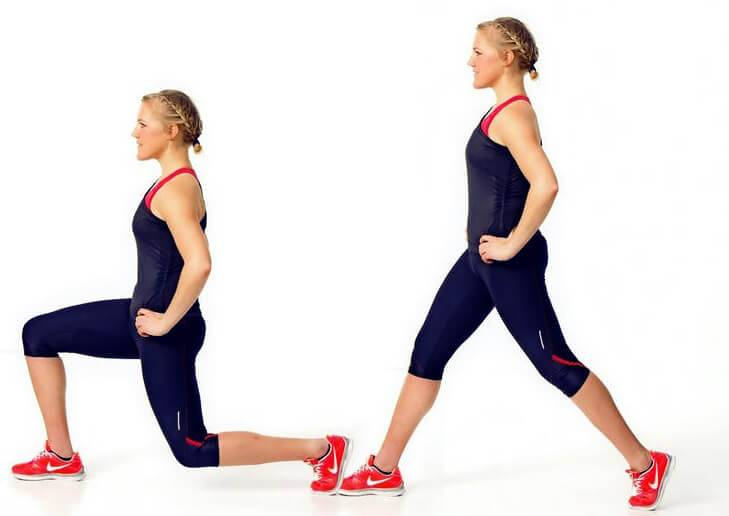
If you're looking for exercises you can do at home that don't need much time or equipment, and on top of that work many muscles at once, plus help lose weight and build muscle and other important health benefits for your body, then lunges are for you. In this article, we’ll learn what Lunges exercises are, how to do them, and their many benefits.
-
What are Lunges exercises?

Lunges exercises, also known as lunges, are one of the most common workouts to strengthen the lower body and leg muscles. With lots of variety in lunges, you can focus on specific muscles or parts of the muscles targeted by the exercise.
Lunges help prevent injuries and are especially important after injuries during rehab. These exercises are often part of core strength programs or rehab plans, letting athletes or anyone exercising get back to activity as soon as possible.
Lunges aren’t just for rehab, they’re a functional exercise that prepares you for daily movements. The way you do lunges closely mimics daily activities like walking, running, and climbing stairs.
So lunges work many lower body muscles in one exercise. They have lots of benefits and are easy to do.
-
What muscles do lunges work on?
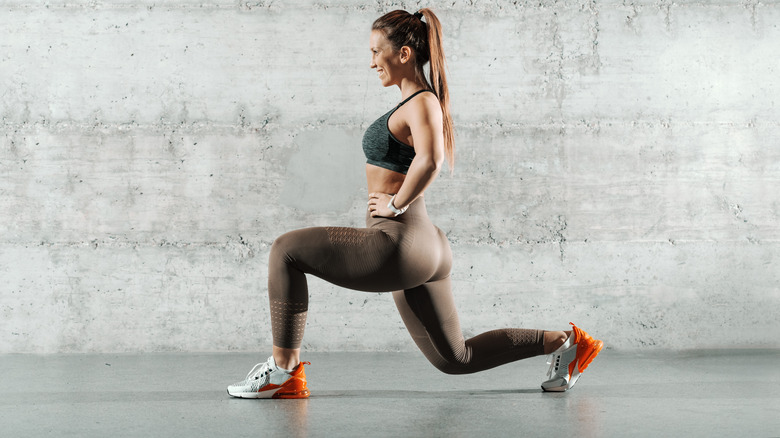
As mentioned before, lunges target the lower body muscles. Many muscles help move and stabilize the body during these exercises. If you want to know exactly which muscles work, here they are:
-
The quadriceps
-
The glutes
-
The hamstrings
-
The calf muscles gastrocnemius and soleus
-
The transverse abdominis
-
The obliques
-
Back muscles like the multifidus and erector spinae.
-
How do muscles work during Lunges?
-
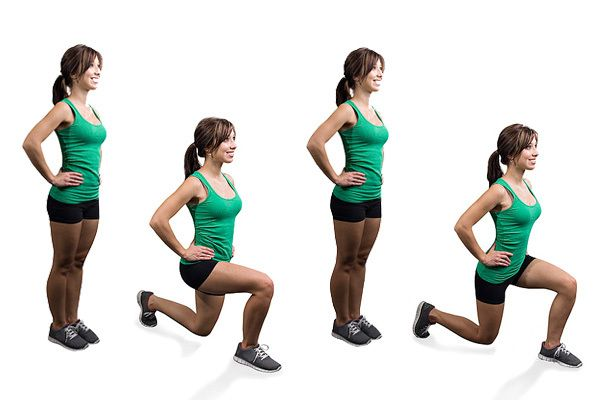
The simplest way to do Lunges is stepping forward. You move forward and lower your body toward the ground, then go back to the start. This is how most people do Lunges.
-
The lower body muscles, especially the quadriceps, fibers, and hamstrings work here. The muscles contract to shorten and stretch to lengthen during Lunges.
-
At the start of the exercise, your leg muscles control the impact when your foot lands, then you lower your body down more in what's called the eccentric phase (meaning the lengthening phase).
-
In this phase, the muscles stretch under pressure to control the movement. The quadriceps slow down the lowering, working with the hamstrings and glutes to control the descent.
-
The return phase in Lunges is a dynamic push back to the start. Some muscles contract strongly to push the body up straight. This is called the concentric phase (meaning the contracting phase).
-
In this phase, the muscles shorten and contract to move the body back to the starting point.
-
One reason Lunges are effective is the work the body does in the eccentric phase (the lengthening phase). Research shows that eccentric muscle contractions are more effective than concentric contractions, which happen during the shortening phase, when comparing muscle growth and size.
So Lunges mainly work the glutes, quadriceps, and hamstrings. These muscles stretch when you lower yourself down, then contract to push your body back to the start.
-
What are the benefits of Lunges?
-
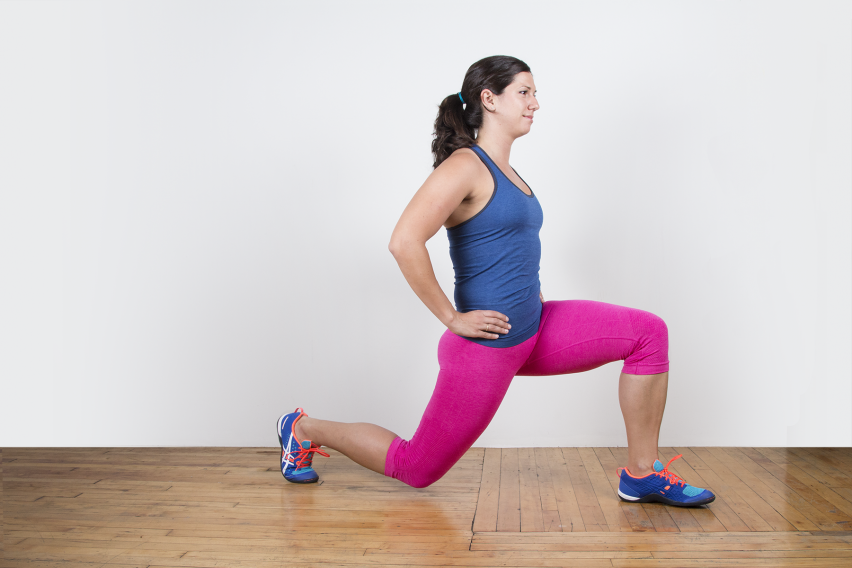
Lunges have many benefits. The biggest is that they work several muscle groups in the lower body at once. This makes them important for strength training and injury prevention, like preventing ACL injuries.
-
Lunges also help with weight loss because they activate large muscles in the lower body. This burns a lot of fat there, builds lean muscle, and can boost metabolism.
-
Lunges are a unilateral exercise because the main leg works more than the back leg. This helps improve strength imbalance better than exercises like Squats, and helps your balance and stability on single-leg moves.
-
Lunges are great for runners because the movement is similar to running. Many don’t realize it’s a great exercise to build strong muscles that absorb high-impact moves.
-
During Lunges, the opposite leg muscles work together to increase the efficiency of your resistance training.
-
So if you have little time to exercise, it's better to do exercises that work multiple muscles and joints like Lunges.
-
How to do Lunges for beginners?
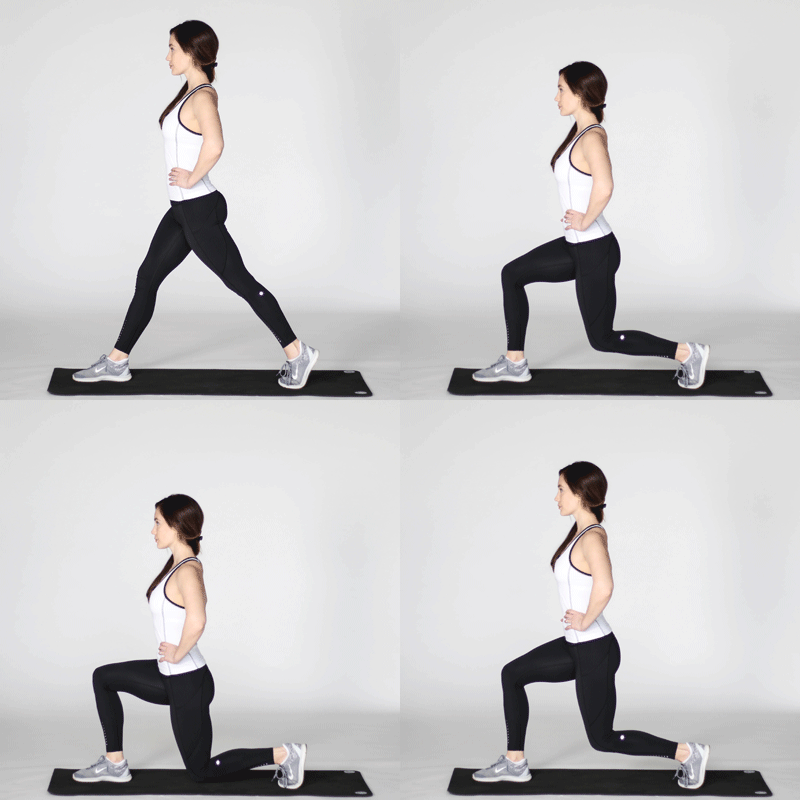
There are many Lunges exercises you can do. Here’s how to do a Lunge for beginners:
-
Start by standing with your feet hip-width apart.
-
Take a step forward longer than a normal walking step, so one leg is in front of your body and the other behind.
-
Keep your front foot flat on the ground, while the back foot has its heel raised.
-
Bend your knees at a 90-degree angle as you lower down.
-
Keep your body (your torso) straight.
-
Then push your front foot hard to go back to the starting point.
-
Switch between your feet the number of times to do the exercise..