The food you eat before, after, or even during your workout can affect your performance and how you feel physically. Eating the right energy foods at the right time - including energy bars, gel drinks, and other easy-to-digest carbs - can give you the energy you need without tiring out your digestive system.
To perform better, you need to pay attention to how you prepare your food. That means focusing on high-quality carbs your body can turn into glucose for quick energy, with any extra stored as glycogen to use later. After exercising, you need to refill your glycogen stores to help you recover and get ready for your next workouts.
-
How to calculate your nutritional needs:-

You need to plan your eating based on how intense, long, and what type of exercise you'll do, especially if you're prepping for a competition or event like a marathon. So it's important to know how much energy you’re likely to use during exercise, as follows:-
-
If your workout is less than 45 minutes, you might just need a light snack 30 - 60 minutes before, water during, and a light snack after.
-
For endurance workouts lasting 1 - 2.5 hours, you should get 30 - 60 grams of carbs per hour of exercise. This gives you enough carbs to keep muscle glycogen topped up while you train.
-
For endurance workouts longer than 2.5 hours, you should have 60 - 90 grams of carbs per hour. If you have stomach issues, reduce your carbs per hour.
-
The right foods to eat before a workout:
Eating before a workout is something only the athlete can decide based on experience. but here are some guidelines to follow:
-
Eat a solid meal 4 hours before the workout.
-
Have a light meal or high-carb energy drinks about 1 to 2 hours before exercising.
-
Drink a recovery drink one hour after training. It’s best if the drink has carbs and protein in a 3 to 1 ratio.
-
Pre and post workout eating plan:

To get ready for workouts, you need to refill your glycogen stores when you wake up since you'll be fasting. You should do this well before the activity and avoid exercising on a full stomach. Depending on how much you eat, give yourself between one and four hours to properly digest your pre-workout meal.
If you’re training early in the morning, it’s best to wake up as early as possible to start your eating plan. If that’s not an option, eat or drink an easy-to-digest carb source. Example: banana Before exercise, no more than 20 - 30 minutes.
It’s clear that the closer you get to starting exercise, the less food you should eat, and if you don’t fuel at all, you risk hurting your physical performance, especially if you’re used to it.
Within an hour or two after finishing a long or high-intensity workout, you should consume high quality protein sources. Some studies show that 25 grams of protein is helpful in these cases. You’ll also need to eat 0.5 to 0.6 grams of fast-absorbing carbs per kilo of your body weight. For a 160-pound athlete, that’s around 150 calories, like a medium potato, a cup of pasta, or white rice. Every 30 minutes for 2 - 4 hours this helps restore glycogen stores and boosts muscle protein synthesis.
-
Foods you should eat:

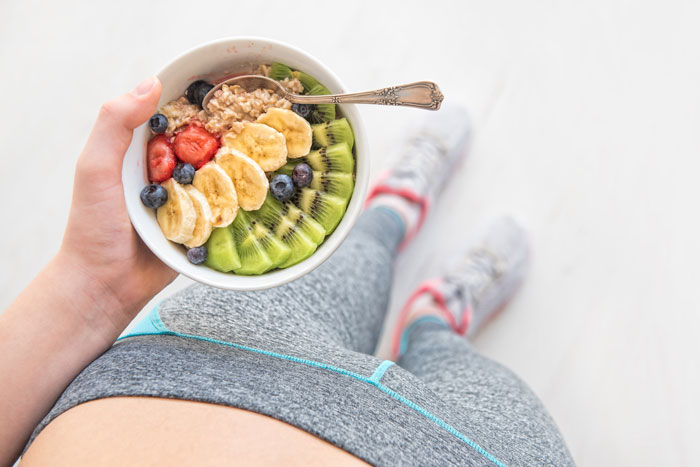
Since glucose is the preferred energy source for most workouts, your pre-exercise meal should include carbs that digest easily like pasta, fruits, bread, energy bars, and sports drinks.
The type of carbs you pick is important too. If you’re prepping for endurance exercise, use low glycemic index (GI) carbs. They don’t spike your blood sugar fast but keep glucose steady longer. These foods include oatmeal and any whole grains.
But if your workout is short and intense, avoid whole grains. Instead, focus on refined grains high in GI that raise blood sugar quickly and give you an energy boost.
Here are some suggested foods to eat before workout, keeping in mind the right time to eat them:-
-
About three to four hours before workout:-
-
Baked potatoes.
-
Cereal with milk.
-
Fresh fruits.
-
Pasta with tomato sauce.
-
Water.
-
Toast with peanut butter.
-
Toast with cheese or lean meat.
-
About two to three hours before workout:
-
Bread or pasta.
-
Fresh fruits.
-
Oatmeal.
-
Yogurt.
-
Water.
-
About an hour or less before workout:
-
Energy gel.
-
Fresh fruits.
-
Up to 0.5 to 1 cup of sports drink.
-
Foods you should avoid before exercise:

Foods with lots of fat or fiber can be hard to digest and stay in your stomach longer. This means the blood for delivering oxygen to muscles goes instead to your stomach.
If this happens during exercise, you might get cramps, stomach pain, or nausea. Generally avoid foods like cake, fries, potato chips, candy bars, and red meat. Beans, dried fruit, cabbage salad, and dairy can be good nutritionally but sometimes you might want to skip them because they cause gas, especially if you tend to bloat. Also avoid hard-to-digest foods, dairy-rich foods, high-fat foods, or low-nutrient foods like fried stuff, sweets, and caffeine.