


If you're someone who cares about healthy diets, you might have read nutrition experts' tips on plant-based diets. These try to cut out meat and animal products to boost overall health and especially heart health. They focus on fruits and veggies but also try to include non-animal protein sources, which are nuts and seeds.
If you've started adding nuts and seeds to your diet, it's useful to know the nutritional info and health benefits of different nuts and seeds to pick the best options for your meal plan.
-
Nutritional info about nuts and seeds:
-
Calories in nuts and seeds:
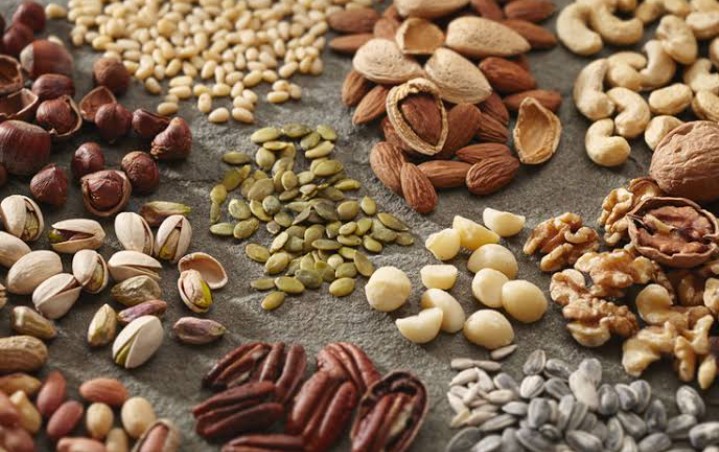
Most nuts and seeds have high calories because they generally contain a lot of fat.
Fat has 9 calories per 1 gram. Protein and carbs both have 4 calories per 1 gram. Since fat gives more calories, you should watch how much nuts and seeds you eat.
If you're looking for nuts and seeds with the least calories, you might want to pick ones still in their shells. This doesn't mean they have less fat, but since you eat them slower, you may end up eating less.
Chestnuts, pistachios, and almonds are low-calorie nuts, while pecans and macadamia nuts have high calories.
-
Carbs in nuts and seeds :-
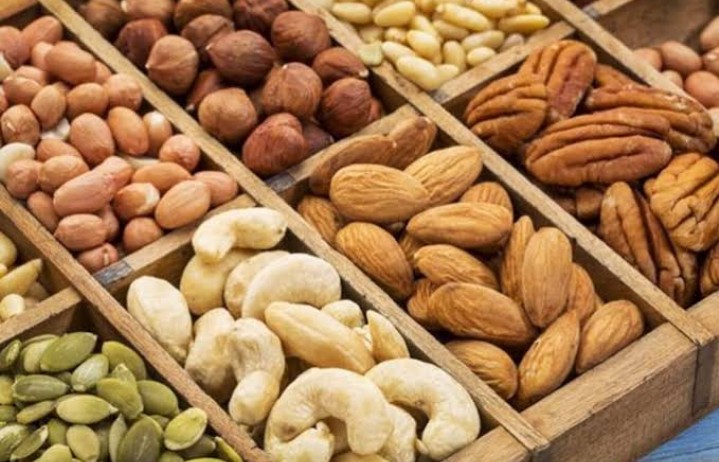
In general, nuts and seeds are low in carbs, but there are some differences between types. For example, pecans, Brazil nuts, and chia seeds have less carbs compared to many other nuts like sunflower seeds, which have a high carb content.
Most of the carbs in nuts and seeds come from fiber.
-
Fat in nuts and seeds :-

Nuts and seeds have a lot of fat, sometimes up to 85%, so a small handful of walnuts or hazelnuts can easily give you about 500 calories.
However, the fat in nuts and seeds is usually monounsaturated and polyunsaturated fat, which is considered healthy fat. Nutrition experts recommend swapping saturated fat from meat and dairy with unsaturated fat from nuts and seeds to boost heart health.
-
Protein in nuts and seeds :-

Both nuts and seeds provide protein, but the amount varies by type. Hemp, pumpkin, and squash seeds are good protein options, as well as sunflower, sesame, and flax seeds which also give good amounts of protein.
High protein nut options include peanuts, almonds, pistachios, cashews, and walnuts.
-
Micronutrients in nuts and seeds are:
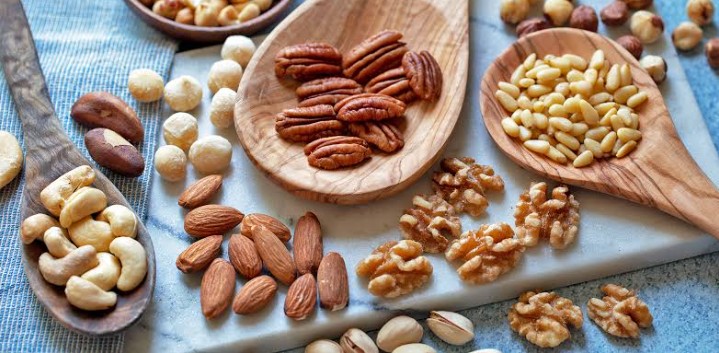
Vitamins and minerals in nuts and seeds can vary, but many provide vitamin E, thiamine, magnesium, potassium, and several B vitamins.
It's good to know nuts also have vanillic acids, which can block absorption of calcium, zinc, and iron.
-
Health benefits of nuts and seeds are:

Besides healthy fats, fiber, and micronutrients, most nuts are packed with plant nutrients, Other main benefits include:
-
Nuts and seeds are full of antioxidants :-
The antioxidants in nuts and seeds, called polyphenols, help protect your body's cells.
-
Nuts and seeds help lower cholesterol :-
Monounsaturated and polyunsaturated fats help move cholesterol to the liver, where it leaves the body through stool.
-
Nuts and seeds help control diabetes :-
Since nuts and seeds are low in carbs, they’re less likely to cause blood sugar spikes, making them a great snack for people with type 2 diabetes.
-
Nuts and seeds have anti-inflammatory properties :-
This is especially true for Brazil nuts, pumpkin seeds, walnuts, and chia seeds. They’re all rich in omega-3 fatty acids, which helps people with diabetes, arthritis, or kidney disease.
-
Nuts and seeds help with digestion:
Because they have a high amount of soluble fiber, which can absorb water in the intestines to soften stool.
Studies show people who eat a lot of plant-based foods like nuts and seeds have lower risks of heart disease, strokes, high blood pressure, and type 2 diabetes.
-
Nuts and seeds in diets:

If you follow a specific eating plan for a health condition, environmental reasons, or personal choice, nuts and seeds can fit into your diet.
There are many diets that use nuts and seeds as a protein source like:
-
The vegetarian diet.
-
The gluten-free diet.
-
The low FODMAP diet.
-
The ketogenic diet.
-
Diets for weight loss.
-
Common questions about nuts and seeds :-
-
Between raw and roasted nuts and seeds, which is better?

While raw nuts are great nutritional sources, roasted ones might be less so because roasting can harm the healthy fats in nuts and can create a harmful substance called acrylamide, which research links to liver cancer.
Some commercially roasted and salted nuts are prepared in oil before being flavored or coated with sugar. Although tasty, these processes reduce the nutritional benefits of nuts.
-
Is nut butter as healthy as whole nuts?

Nut butters, which are great protein sources, often get loaded with salt, sugar, stabilizers, and vegetable oils. That makes them less healthy than whole nuts.
If you pick natural nut butter or make it yourself, it's so high in energy it's easy to eat too much and rely on it as a healthy diet base.
-
What's the best way to store nuts and seeds :-

To keep the best quality, always store nuts and seeds in the fridge or freezer so oils don't go bad. Nuts and seeds with high levels of polyunsaturated fats spoil easily, especially when cut, cracked, or ground up in meals.
-
Recipes and prep tips :-

There are endless ways to enjoy nuts and seeds in any meal or as a snack. Many people just eat them for a quick protein boost.
But you can also add them in salads, smoothies, on yogurt, with oatmeal, in food mixes, your favorite sweets, or include them while cooking.
-
Allergies and reactions from nuts and seeds :-

You can't really talk about nuts without mentioning nut allergies. While peanut allergy gets most attention, allergies to other types of nuts also exist.
Nut allergies tend to affect kids more than adults. Up to 20% outgrow it, but those who show symptoms early are more likely to have it for life.
Some allergies can be life-threatening, causing a full body allergic reaction called anaphylaxis.


