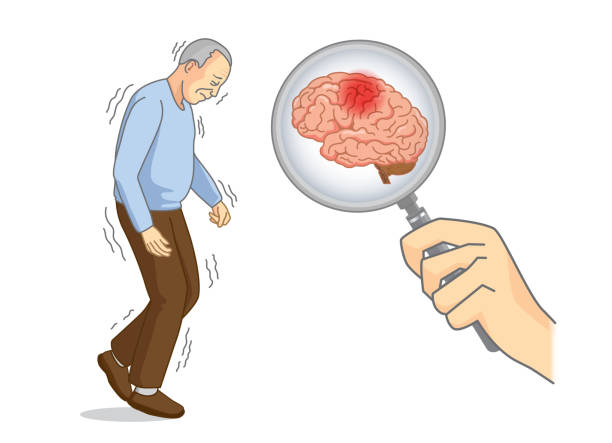

It is Parkinson's disease a neurological disorder marked by tremors that affect muscles and movement functions. This disease causes challenges that disrupt daily life like moving, sleeping, speaking, memory, mental health, and more.
In this article, we will learn about the early signs and symptoms of Parkinson's, its causes, how it is diagnosed, its progression, and treatment options available.
Early symptoms of Parkinson's disease

Early signs include tremors that start mild but get worse over time, leading to muscle stiffness and trouble moving. The tremors can affect fingers, hands, arms, legs, jaw, and head.
Other early symptoms include walking slower than usual and struggling with ConstipationAlso, about 60% of people with Parkinson's disease suffer from dementia.
Other symptoms of Parkinson's disease include:-
-
Balance problems
-
Changes in taste and smell
-
Constipation
-
Difficulty walking and moving
-
Frequent need to urinate
-
Lack of facial expressions
-
Memory loss
-
Mood swings and mental health
-
Muscle stiffness or rigidity
-
Sleep difficulties
-
Slow movements
-
Speech difficulties
Causes of Parkinson's disease

Parkinson's disease happens when brain cells in the part that controls movement get damaged or die. When this happens, the brain can't make dopamine, a neurotransmitter linked to attention and movement.
Scientists don’t fully understand why this happens to some people. However, they think it's partly due to genetics and outside environmental factors like pollution and harmful chemicals used in farming.
Also, there are things that raise the risk of Parkinson’s. Getting older is the main risk factor, with average diagnosis age around 60. It affects men more often than women.
Plus, family history is another concern, as people with relatives who have Parkinson’s are more likely to get it. Head injuries also increase the risk.
How Parkinson’s disease is diagnosed

Diagnosing Parkinson’s usually starts with a visit to a healthcare provider (neurologist). They’ll ask about symptoms and medical history. They may also do tests to check movement, speech, and other abilities.
While tests alone can’t diagnose Parkinson’s, a brain scan called a DaT scan can show parts of the brain and help the doctor see if symptoms come from Parkinson’s or something else.
Age 60 is when Parkinson’s is usually diagnosed. Up to 90% of patients are diagnosed after age 50, but symptoms can show up earlier due to some genetic factors.
Treating and managing Parkinson's disease

It can take time to adjust and process the news after being diagnosed with Parkinson's. The disease can be a physical and emotional challenge and affect social life. So, it's important to learn more about Parkinson's and use available resources.
Treatment of Parkinson's depends on the person's needs, symptoms, and preferences. Some possible treatment options include:
-
Oral or injectable medications
-
Diet changes
-
Occupational therapy to improve daily motor skills
-
Physical therapy
-
Physical activity and regular exercise
-
Speech and language therapy
-
Surgery, like deep brain stimulation
-
Psychotherapy to support mood, mental health, and deal with depression and anxiety
Parkinson's disease complications

Parkinson's disease can lead to complications and health challenges. For example, severe stiffness, tremors, or balance problems can cause falls and serious injuries.
People with Parkinson's may also face mental challenges like psychosis and hallucinations. Also, other issues come with Parkinson's like depression, sleep disorders, and cognitive difficulties.
Also, about 70% of people with Parkinson's suffer from High blood pressure.
How to cope with Parkinson's disease

There are many resources available for people with Parkinson's, and many ways to manage the disease. Support plans depend on your personal experience with it.
For example, many people stress out, which can make symptoms worse. Stress management like exercise and mindfulness might help ease symptoms.
Other support options include:-
-
Counseling to help deal with stress and anxiety
-
Support groups to connect with others who have the same condition
-
Assistive tech like devices that help with movement and speech
-
Educational programs to raise awareness about the disease and ways to manage it
-
Movement, like complementary therapy with massage, tai chi, and yoga to improve movement, balance, flexibility, and stability