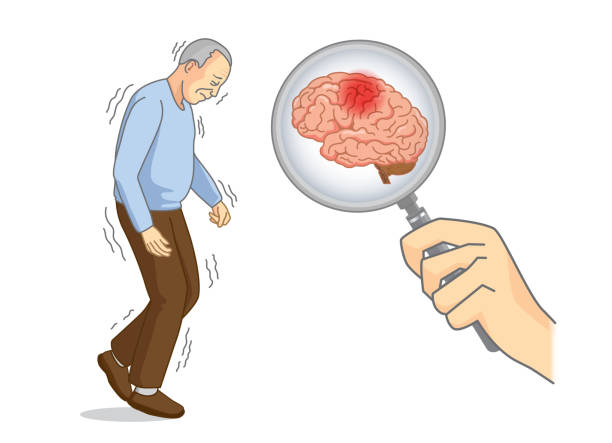

Parkinson's Disease is a chronic neurological disorder that mainly affects body movement and gets worse over time. It happens when dopamine-producing nerve cells in the brain get damaged or shrink, causing dopamine levels to drop. Dopamine is the neurotransmitter that controls movement and coordination.
Parkinson's usually starts with mild hand tremors, muscle stiffness, or slow movements. As it progresses, it may affect balance, speech, and daily activities. The exact causes are not fully known, but early diagnosis and treatment can help improve life quality and control symptoms.
In this article, we'll take a detailed look at Parkinson's symptoms, including common, rare symptoms, and complications as the disease progresses.
Common Symptoms of Parkinson's Disease

Parkinson's usually starts mild and worsens over years. Not everyone will have all the following symptoms, but most patients experience them.
Common symptoms of Parkinson's include:
1. Tremors
Parkinson's tremors happen at rest and go away with movement, but they usually come back when holding the hand still, like when lifting a spoon to the mouth. That's why people with Parkinson's often spill stuff.
Parkinson's tremors are often described as a "pill-rolling" movement. They are slow and vary in strength. They usually start in one hand and then spread to the other side. But the strength is usually uneven between sides.
Tremors usually affect the hands and arms, but they can also affect the chin and legs.
2. Stiffness
Parkinson's often causes stiffness (rigidity) all over the body. Like tremors, stiffness usually starts on one side, often the same side as the tremor. But later it affects both sides.
About 60% of people with Parkinson's feel pain from stiffness and muscle tightness. This pain affects muscles or joints without any clear injury.
3. Shuffling steps
People with Parkinson's often walk noticeably slowly, with slow foot movements and tend to keep their legs fairly straight instead of bending them while walking.
Also, when people with Parkinson's walk, their feet stay close to the ground instead of lifting with each step.
4. Slow Movement
Most people with Parkinson's have slow movement, called bradykinesia. This symptom starts early in the disease. But like most symptoms, it may only be noticed after diagnosis.
5. Speech Problems
Speech problems are common in Parkinson's patients. They often have weak voices, sometimes nasal or monotone, with unclear pronunciation. Some speak slowly, others more quickly.
6. Small Handwriting
Micrographia in Parkinson's is noticeable as handwriting gets smaller and less clear as the disease progresses.
If someone has micrographia from Parkinson's, their writing is usually small but clear. The letters and words shrink more as they keep writing, and after a few sentences, the words often start to slant down the page.
7. Lack of facial expressions
One key sign of Parkinson’s is a lack of facial expressions. In early stages, the person might not notice it, but others will.
When there’s no facial expression, the person may seem like they don’t care about what’s happening or what others say, even if they actually do.
8. Indifference
On the other hand, indifference means a real lack of interest, and many with Parkinson’s feel this sometimes. It might be one of the first signs of the disease.
9. Reduced blinking
A common Parkinson’s symptom is less blinking. This can make the person look like they’re staring at someone or something. It also can cause dry eyes.
10. Dry skin
If someone has Parkinson's disease, they likely have dry skin and peeling, plus a dry scalp.
11. Sleep Problems
Most people with Parkinson’s have trouble sleeping. This can range from difficulty falling or staying asleep to feeling sleepy during the day. Sleep problems eventually cause tiredness and fatigue.
Rare Symptoms of Parkinson's Disease
There are some other less common symptoms of Parkinson'swhich include:
-
Unexplained crying spells
-
Low blood pressure
-
Forgetfulness
Symptoms of advanced Parkinson's disease

Parkinson's is a progressive disease, and serious complications are more likely in late stages, These include:-
1. Stooped posture
With Parkinson's, a noticeable forward bend in posture can develop. Patients start leaning forward. This usually starts in late stages and can cause neck and back pain.
2. Freezing
Parkinson's can also cause temporary muscle freezing, which is worse than stiffness. It often affects the muscles that are already stiffest but doesn't happen to all patients. It usually shows up in later stages.
3. Trouble swallowing
Sometimes, slowed muscle movements in Parkinson's can mess up the coordination and movement of swallowing muscles, making chewing and swallowing food safely hard.
4. Balance problems
Parkinson's can affect balance, making it tough to exercise or even do daily stuff like going up and down stairs. As it gets worse, standing without support gets harder.
5. Constipation and urinary retention
Slow muscle movement linked to Parkinson's can affect the gut and bladder muscles, causing constipation or trouble peeing.
6. Mood swings
Some people with Parkinson's, especially late stage, have quick mood changes. Sadness is the most common feeling for those living with it.
7. Hallucinations
Drugs used to treat Parkinson's disease can cause hallucinations. These are usually visual, but can also be auditory, visual, or tactile, though less common.
Patients often know they are having hallucinations, but this awareness decreases as cognitive skills decline. Formed hallucinations, like seeing people or animals, are very common, as is wrongly believing there's rain or fire nearby.
Need to see a healthcare provider

If someone has symptoms like tremors, stiffness, balance problems, memory loss, or sleep issues, they should make an appointment with a healthcare provider to check these out. These symptoms might be linked to Parkinson's or not, but a specialist's assessment helps manage the condition.
It's sometimes easy to find other explanations for early Parkinson's symptoms. This and fear of diagnosis often stop people from getting checked. But many Parkinson's symptoms can be treated, and early treatment is the best way to manage them.
Although Parkinson's causes some life disruption, luckily it isn't deadly, and people often live long, healthy, and productive lives with it.